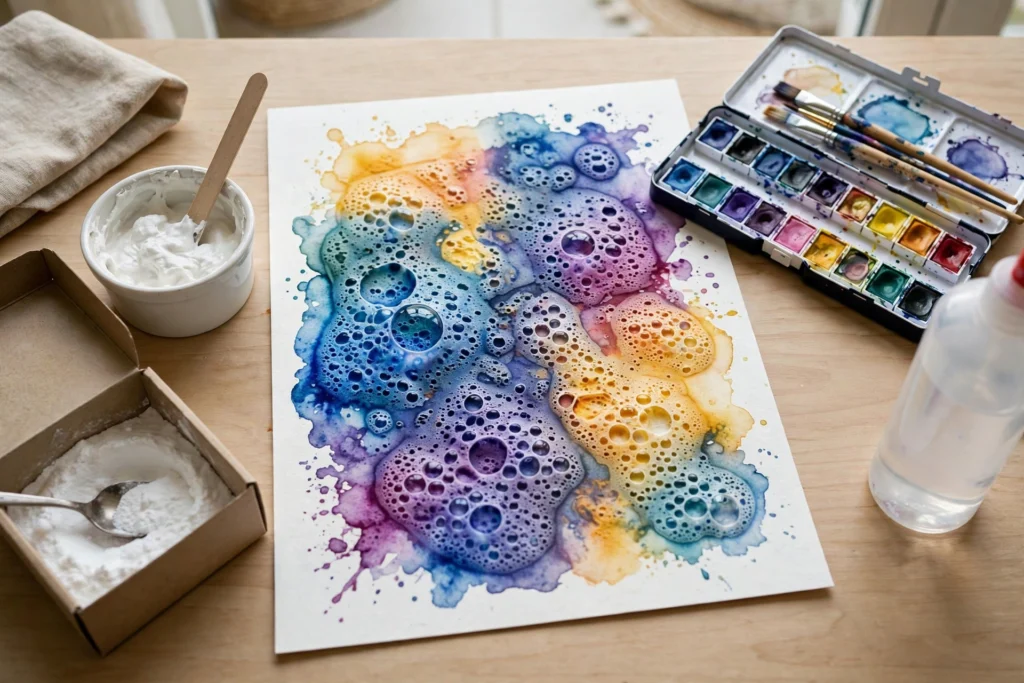
Painting is fun. Painting that fizzes and bubbles when you spray it? That is a whole different level. You paint a picture with a baking soda mixture, brush watercolors over it, and then drip vinegar on top — and your painting comes alive with fizz. My kids gasped the first time. Then they immediately demanded to do it again.
This one is the perfect rainy-day activity because every single material is already in your kitchen. No special order, no craft store run. Just baking soda, vinegar, and whatever paint you have.
Why You'll Love Making This
It is art plus science in one sitting, which means it buys you a solid hour of engaged kids. The painting phase satisfies the creative ones, the vinegar-spraying phase satisfies the experimental ones, and the surprise of watching colors bubble and blend keeps everyone at the table.
It is also genuinely beautiful. The baking soda leaves a crystalline, textured finish that makes the watercolors look luminous — even my toddler's enthusiastic scribbles dried into something I did not mind hanging on the fridge.
Materials You'll Need
- Baking soda — 2 tablespoons per batch
- Water — 1 tablespoon per batch
- Watercolor paints — liquid or pan watercolors
- White vinegar — in a small squeeze bottle or cup
- Dish soap — one drop (helps the mixture spread)
- Watercolor paper or thick cardstock — thin paper will warp
- Paintbrushes — a few sizes
- Plastic cups and spoons — for mixing
- A tray or tablecloth — to catch the fizz
Step-by-Step Directions
- Cover your workspace with a tray or tablecloth — things will get fizzy.
- In a plastic cup, stir 2 tablespoons of baking soda with 1 tablespoon of water until it forms a thin paste.
- Stir in one drop of dish soap to help the mixture spread smoothly.
- Use a paintbrush to paint a design on your watercolor paper with the baking soda paste.
- Let the baking soda layer dry completely (about 20 minutes).
- Paint over your design with watercolors and watch the colors soak into the texture.
- Fill a small squeeze bottle with white vinegar and drip or squirt it onto the painted areas.
- Watch the painting fizz and bubble as the vinegar reacts with the baking soda.
- Set the finished artwork somewhere safe to dry completely before displaying it.
Tips for the Best Fizzy Paintings
Thick paper matters — regular printer paper will wrinkle and tear under all that liquid. Watercolor paper or cardstock holds up beautifully. And let the baking soda layer dry fully before adding watercolors, or the fizz will start too early. Kids' favorite tool is the squeeze bottle; an old condiment bottle or medicine dropper works great.
Fun Variations to Try
Paint secret messages: write with the baking soda paste on white paper, let it dry, then paint watercolors over the whole sheet — the message appears as the colors resist the paste. Try cookie-cutter shapes as stencils, or paint a galaxy with dark blues and purples before adding the vinegar. For older kids, make it a full lesson: ask them to predict which colors will fizz the most before they spray.
<p><img src="https://thediynook.com/wp-content/uploads/2026/09/pin-v1-145.webp" alt="Fizzy Baking Soda Painting for Kids" /></p>
FAQs
Is baking soda painting safe for toddlers?
Yes — every ingredient is non-toxic. Supervise toddlers so they do not drink the vinegar or eat handfuls of paste, but the materials themselves are kitchen-safe.
What kind of paint works best?
Watercolors are ideal because they are water-based and soak into the baking soda texture. Acrylics are too thick and will seal the surface so the fizz cannot reach it.
Can I skip the dish soap?
Yes. It just helps the paste spread more smoothly on the paper. Your painting will still fizz without it.
Why is my painting not fizzing?
The baking soda layer probably was not dry enough, or it was too thin. Paint a thicker layer and give it a full 20 minutes to dry before adding vinegar.
What paper should I use?
Watercolor paper is best, but any thick cardstock works. Regular printer paper warps and tears, which frustrates little artists fast.
Can we use food coloring instead of watercolors?
Absolutely — a few drops of food coloring mixed with water makes a vibrant paint that reacts beautifully with the vinegar spray.