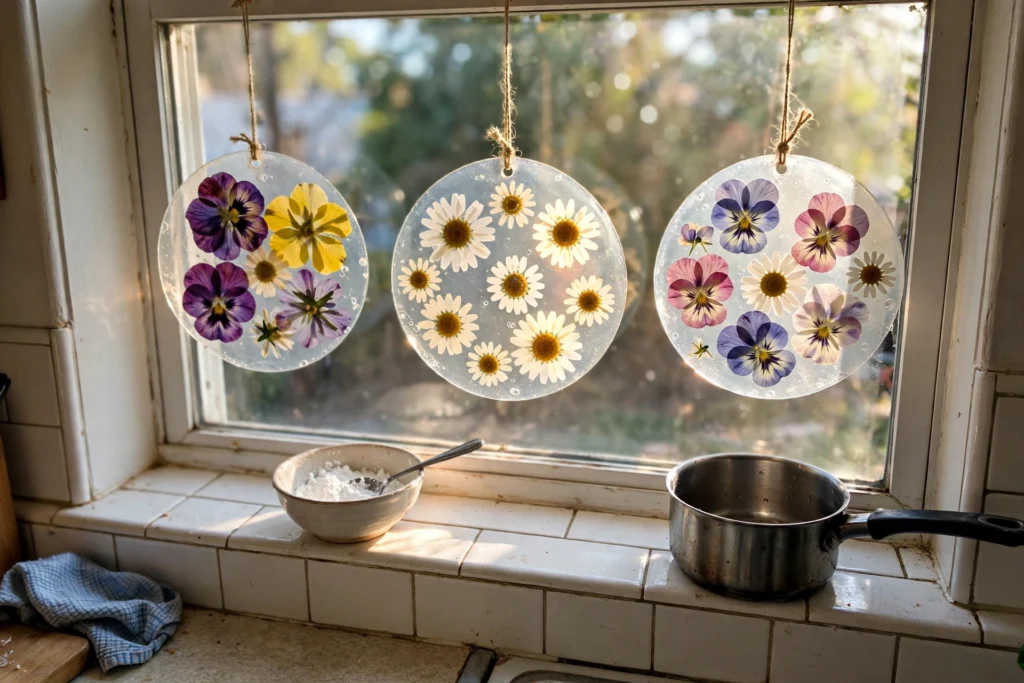
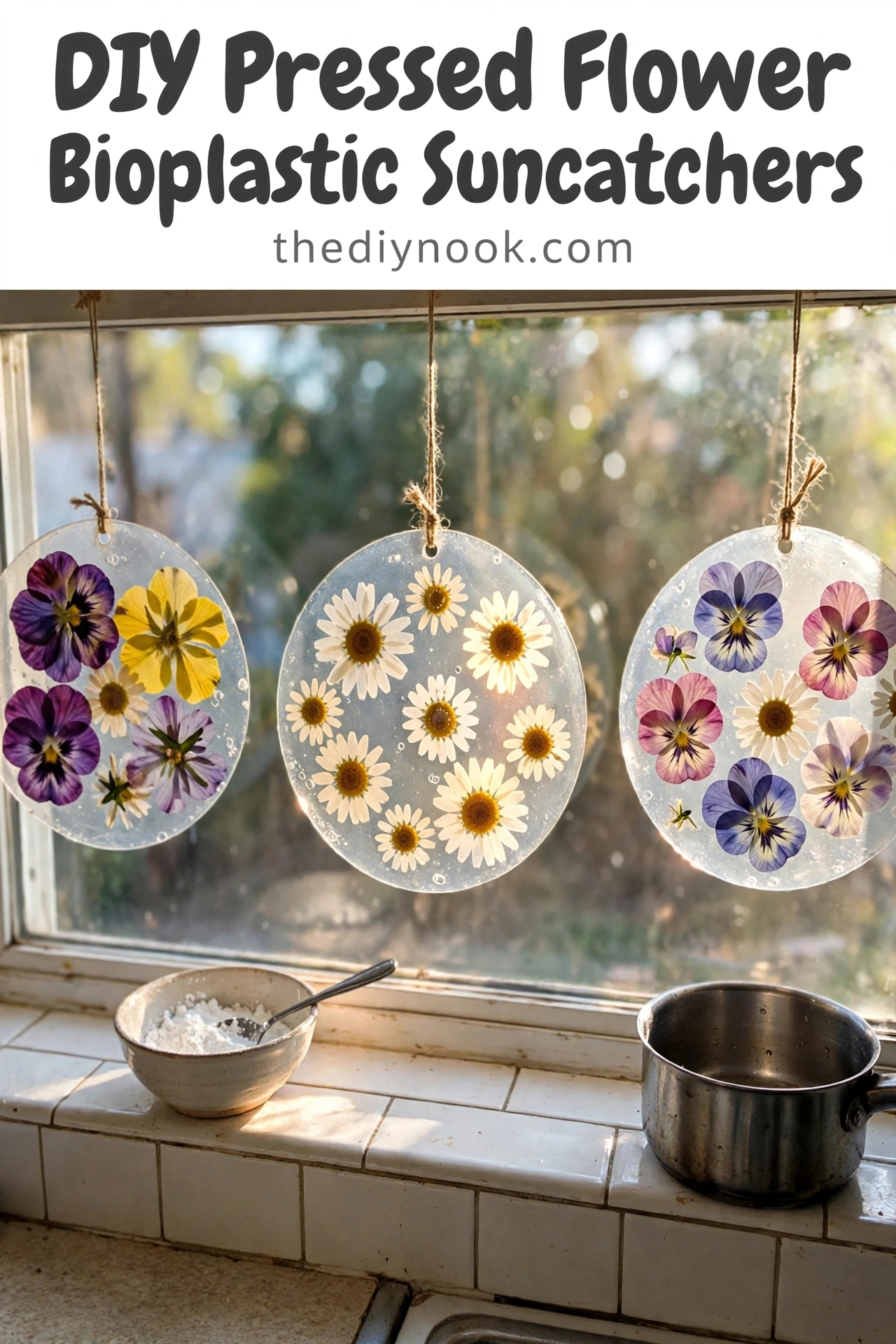
Here is a craft that made my eco-conscious heart so happy: suncatchers made from actual bioplastic you cook up yourself from cornstarch. You stir up the mixture, press flowers and colors into it, and end up with translucent discs that glow in the window. And when you are done with them, they compost. How cool is that?
My kids loved the cooking part, watching the runny mixture turn thick and gel-like felt like a kitchen science experiment. Then pressing tiny flowers into their discs turned them into little artists. These are the kind of crafts that make kids feel like they invented something.
Why You'll Love Making This
Everything in this project comes from your kitchen, which means no craft-store run and no plastic waste. Kids get a real lesson in where materials come from, and parents get a craft that aligns with all those reduce-reuse talks we give.
The pressed-flower version is the star here. Real flowers suspended in translucent bioplastic look like stained glass, and every kid's design comes out completely different. Ours hang in a row on the kitchen window and I smile every time I do dishes.
Materials You'll Need
- Cornstarch: 1 cup
- Water: 1 cup
- White vinegar: 1 tablespoon
- Corn syrup: 1 tablespoon
- Food coloring: assorted colors
- Pressed flowers: small flat flowers and leaves, real or store-bought
- Baking parchment: for lining the baking sheet
- Cookie cutters: for shaping the discs
- Paintbrush: optional, for adding details
- Scissors: for trimming flowers
Step-by-Step Directions
- Mix the cornstarch, water, vinegar, and corn syrup in a saucepan and stir over low heat. A grown-up handles the stove.
- Keep stirring until the mixture thickens into a translucent gel, then remove it from the heat and let it cool slightly.
- Divide the mixture into small bowls and stir food coloring into each one.
- Line a baking sheet with parchment and use cookie cutters or free-form shapes to spread the mixture about a quarter inch thick.
- Press flowers and leaves gently into the wet mixture, arranging them however you like.
- Let the shapes dry for 24 to 48 hours, then carefully peel them off the parchment and hang them in a sunny window.
Tips for the Best Results
Keep the mixture layer thin and even, about a quarter inch. Too thick and it takes forever to dry and can crack. Too thin and it tears when you peel it. The first batch is your practice round, and that is totally fine.
Press the flowers in while the mixture is still tacky but not runny. If you wait too long they won't stick, so arrange your flowers first and work quickly. Flat, thin flowers like pansies and daisies work best.
Fun Variations to Try
- Natural dyes: color the mixture with beet juice for pink or turmeric for golden yellow
- Seasonal shapes: stars for winter, leaves for fall, hearts for Valentine's Day
- Painted details: use a paintbrush to swirl leftover colored mixture into patterns before it dries
FAQs
How long do bioplastic suncatchers take to dry?
Give them 24 to 48 hours in a dry spot. Humid weather slows things down, so a warm room with good airflow is ideal.
Are these really biodegradable?
Yes, the whole thing is cornstarch, water, vinegar, corn syrup, and food coloring. When you are done enjoying them, they can go straight into the compost.
Can I use a different starch?
Potato starch works as a substitute, though the texture comes out a little different. Cornstarch gives the clearest, most glass-like result.
What if my mixture gets too thick?
Stir in a spoonful of water and warm it gently while stirring. It loosens right back up.
How do I hang them?
Punch a small hole near the top before they dry completely and thread string through it, or use a window suction cup with a hook. Keep them out of rain, since water will dissolve them over time.

 DIY Stained Glass Suncatcher Craft for Kids
 DIY Plastic Lid Suncatchers for Kids
 Easy Rainbow Bead Spiral Suncatcher for Kids
 Easy Clear Glue Suncatcher Craft for Kids
Leave a Reply