
The first time my kids made bouncy balls, you would have thought they'd discovered actual superpowers. They mixed, they kneaded, they rolled — and then the moment of truth: that first bounce off the kitchen floor. Cue the screaming. They've been bouncing those things off every surface in the house ever since.
This is one of those crafts that's secretly a science experiment, so it checks two boxes at once. It's quick, it's hands-on, and it ends with a toy they actually play with. Win-win-win.
Why You'll Love Making This
Kids LOVE a craft that turns into a toy, and this one delivers in about ten minutes. The transformation is the best part — you start with a bowl of gloopy glue, and through some stirring and kneading, it suddenly firms up into a real, bouncy, bouncy ball. My two narrated the whole thing like tiny sports commentators.
It's also a genuinely calming activity. Kneading the warm ball between their palms is repetitive in the best way, and it's become our go-to for rainy afternoons when everyone is bouncing off the walls — now they can bounce something else instead.
Materials You'll Need
- White PVA school glue: 20 to 30 ml per ball
- Contact lens solution (with boric acid or sodium borate in the ingredients): a few squirts
- Baking soda: 1 small pinch per ball
- Cornstarch: a spoonful, for dusting if sticky
- Food coloring or liquid watercolors: a drop or two
- Small bowl or cup: for mixing
- Spoon or craft stick: for stirring
- Tray or plate: for resting finished balls
Step-by-Step Directions
- Pour the glue into a small bowl.
- Stir in a pinch of baking soda until the glue looks slightly thicker.
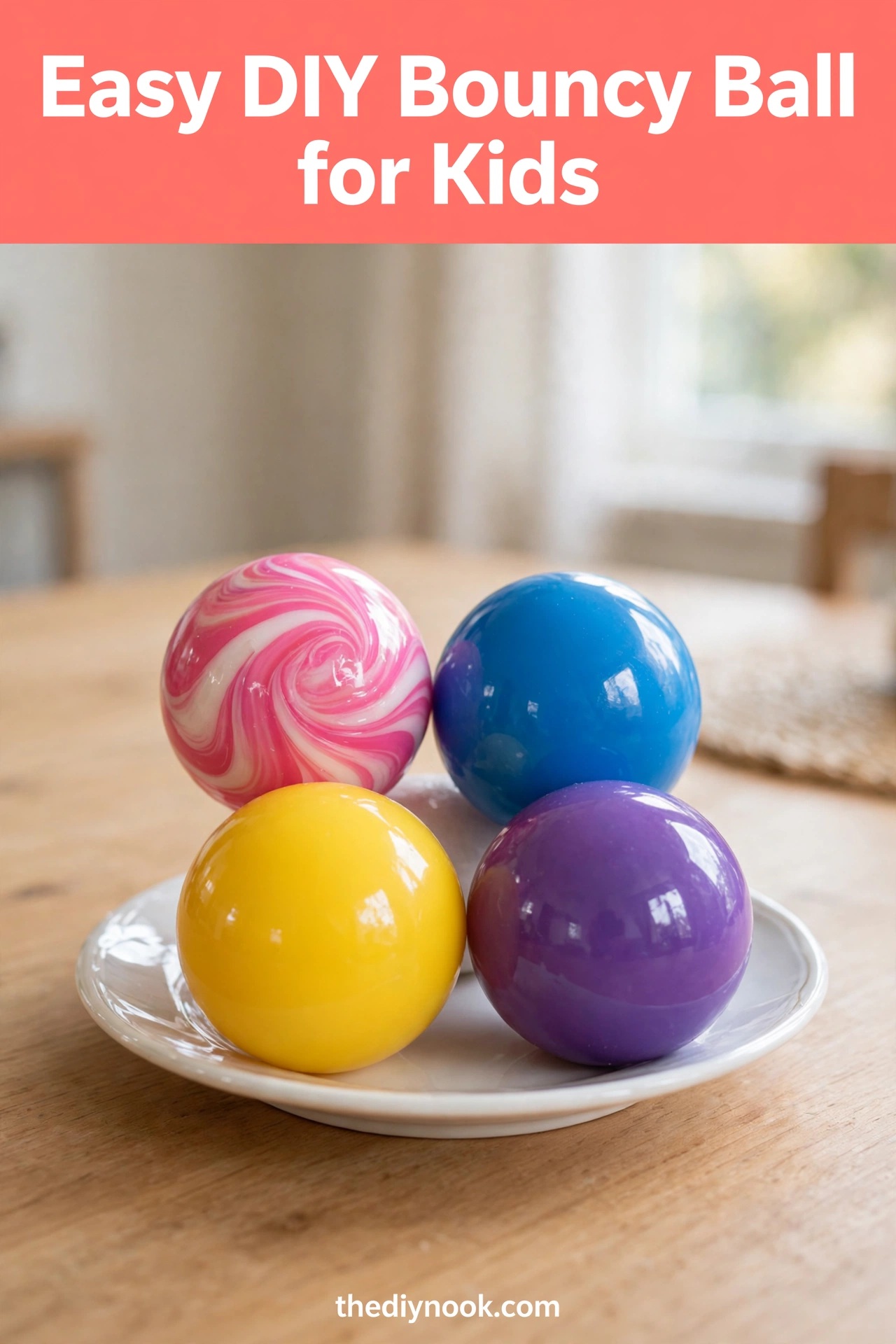
- Add a drop or two of food coloring and stir gently — fold it in slowly if you want a marbled swirl effect.
- Add the contact lens solution one small squirt at a time, stirring constantly. The mixture will start to clump and pull away from the bowl.
- When it's mostly holding together, pull it out with your fingers and start kneading.
- Knead for 3 to 5 minutes, rolling it between your palms. If it's sticky, dust your hands with a little cornstarch.
- Shape it into a smooth ball and let it rest on a tray for about an hour to set.
- Test the bounce! Drop it from a low height and watch it go.
Tips
- Add the activator slowly — too much at once makes the ball stiff and crumbly instead of bouncy.
- Warm hands make kneading easier and the ball smoother.
- If a ball goes tacky after a few days, a light dusting of cornstarch brings it back.
Variations
- Marbled balls: don't fully mix the color — fold it in halfway for gorgeous swirls.
- Glitter balls: press a pinch of fine glitter into the surface while it's still tacky.
- Scented balls: knead in one tiny drop of essential oil (lavender is lovely) — keep it minimal.
FAQs
Is this safe for kids to make?
Yes, with supervision. Use contact lens solution as the activator rather than raw borax powder, keep the mixture away from mouths, and wash hands afterward. Grown-ups should handle the measuring for little ones.
Why is my ball crumbly instead of bouncy?
Too much activator or too much cornstarch. Knead in a tiny squirt more of contact solution or a drop of warm water to bring it back together.
How long do homemade bouncy balls last?
With good storage — cool, dry, out of direct sun — they keep their bounce for weeks to months. Heat is the enemy; it softens the polymer.
Can I store them together?
Give each ball its own space at first so they don't stick. A cloth bag or a small jar works great once they're fully set.
What if the ball loses its bounce?
Try kneading it again with a little cornstarch. Sometimes a refresh brings the spring right back. If it's truly done, the kids can always make a fresh batch — that's half the fun anyway.

 Easy Cornstarch Dish Soap Slime for Kids
 DIY Super Bouncy Balls for Kids
 Easy Glow-in-the-Dark Rainbow Potion Bottle for Kids
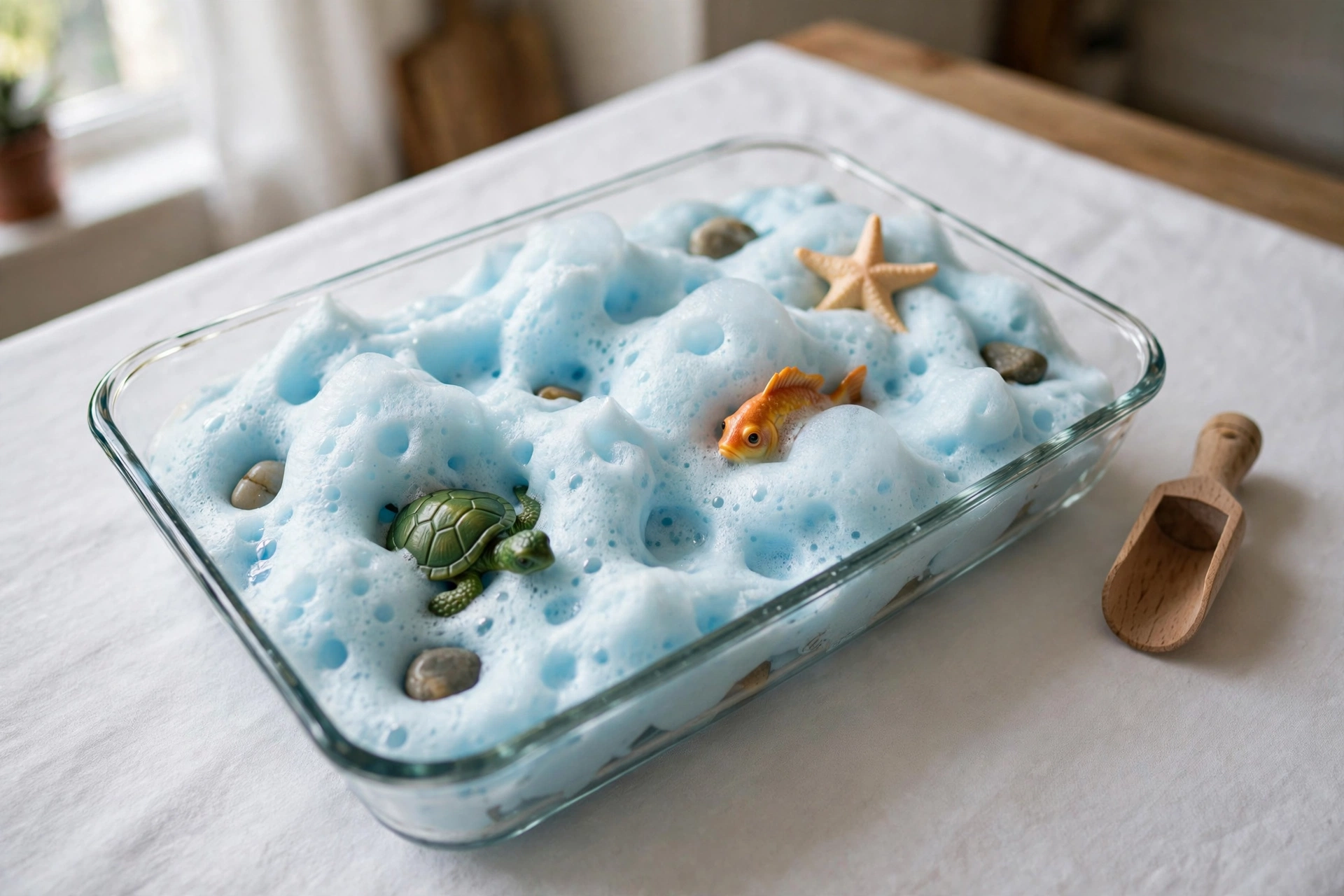 Easy Ocean Foam Sensory Bin for Mindful Kids Play
Leave a Reply