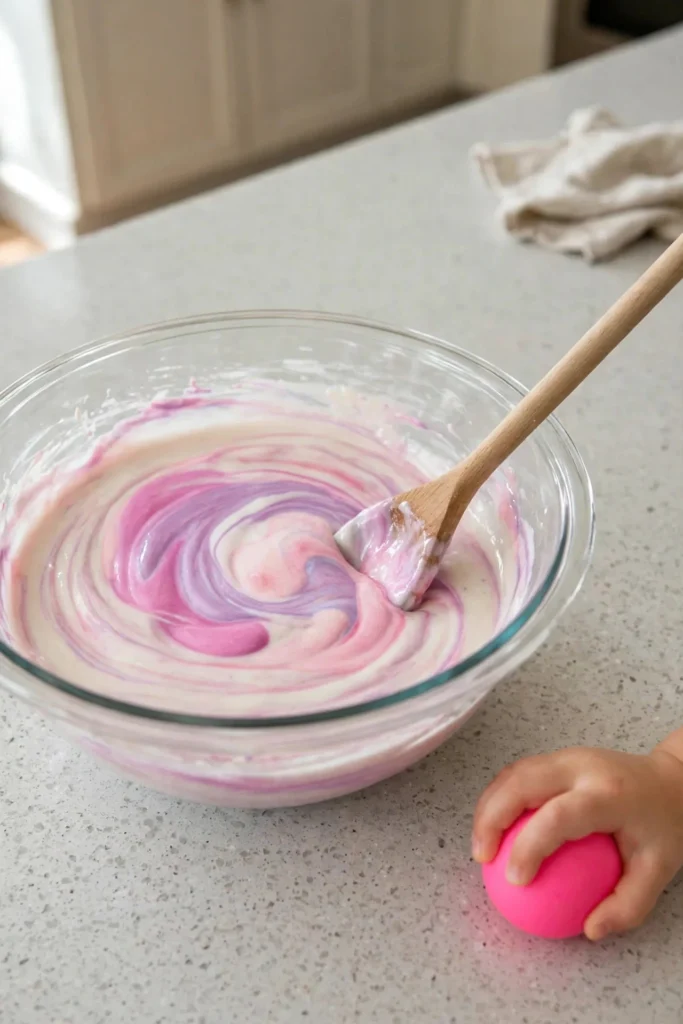
The first time we made these, my kids absolutely lost it when the ball actually bounced. Like, real bouncing, across-the-kitchen-floor bouncing, from something we mixed up in a bowl. Their little scientist brains were buzzing, and honestly so was mine.
This is one of those crafts that secretly teaches chemistry while the kids just think they're making toys. You mix a few simple ingredients, knead the dough, and suddenly you have a real bouncy ball. It takes about 30 minutes start to finish, and the look on their faces when it works is worth every bit of the mild stickiness along the way.
Why You'll Love Making This
Kids get a hands-on lesson in polymers (fancy word for "how stretchy stuff works") without a single worksheet in sight. They measure, stir, squish, and knead, and then they test their results by bouncing their creations down the hallway. Science has never been this fun, or this colorful.
It's also a fantastic party or playdate activity. Each kid can pick their own color, make their own ball, and take it home as a favor. Cheap, memorable, and no one leaves with a sugar crash.
Materials You'll Need
- 1 tablespoon white school glue
- 1/2 teaspoon liquid laundry starch
- 1/2 teaspoon cornstarch
- Food coloring (a drop or two)
- Mixing bowl
- Spoon for stirring
- Wax paper or a plastic surface for drying
- Measuring spoons
Step-by-Step Directions
- Lay down wax paper or a plastic surface on your table to keep the mess contained.
- Add 1 tablespoon of white school glue to the mixing bowl.
- Slowly stir in 1/2 teaspoon of liquid laundry starch until the mixture starts to come together.
- Mix in 1/2 teaspoon of cornstarch, stirring well. This is what gives the ball its bounce!
- Add a drop or two of food coloring and stir until the color is even throughout.
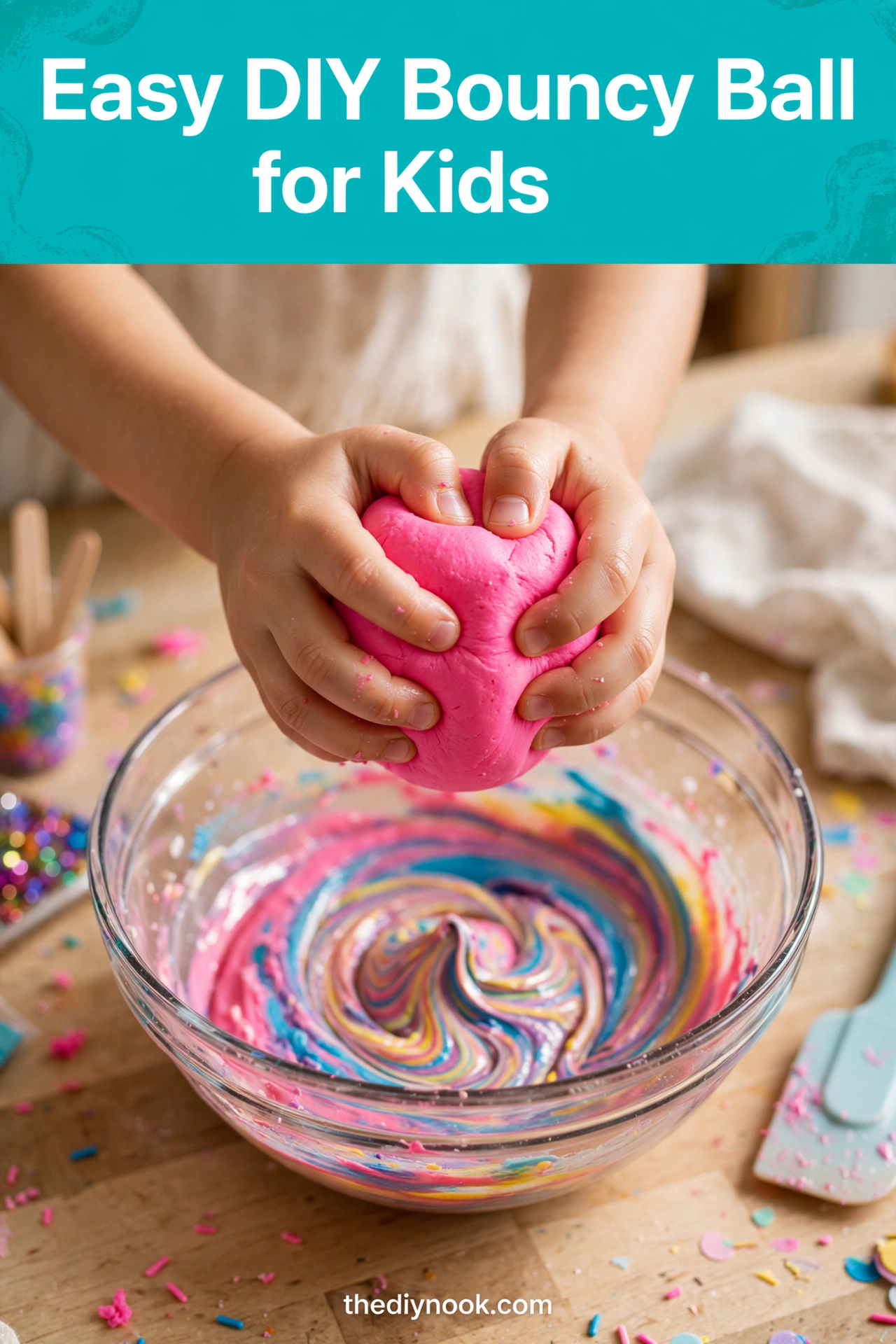
- Scoop the mixture out with clean hands and knead it until it feels rubbery but still soft and pliable.
- Roll it into a smooth, compact ball, about the size of a golf ball.
- Set the ball on the wax paper and let it dry for 20 to 30 minutes, then bounce away!
Tips & Variations
If the mixture feels too sticky while kneading, dust your hands with a tiny bit of cornstarch. Too crumbly? A drop of glue brings it back. This one needs an adult nearby since laundry starch isn't for tasting, so make it a together project.
Mix two colors of food coloring for a marbled look, or add a drop of vanilla or peppermint extract for a scented ball. Want a bounce contest? Have each kid make a different size and see which one bounces highest. Bigger balls need a little extra kneading to stay smooth.
FAQs
What makes the ball bounce?
The glue and laundry starch react to form a stretchy polymer, the same kind of science behind slime. The cornstarch firms it up so it holds a ball shape and bounces instead of splatting. Kids love hearing they're doing real chemistry!
Can I use clear glue instead of white school glue?
White school glue gives the most reliable bounce. Clear glue can work but tends to make a softer, less bouncy ball. Stick with classic white for the best results.
My ball isn't bouncing. What went wrong?
It's almost always the ratio. Too much liquid makes it floppy, too much cornstarch makes it crumbly. Measure carefully, knead it really well, and let it dry the full 30 minutes before testing.
How do I store the bouncy balls?
Keep them in a sealed bag or container at room temperature, away from direct sunlight. They'll stay bouncy for weeks. If one dries out and cracks, it's an excuse to make a fresh one!
Is this safe for younger kids?
With adult supervision, yes for ages 4 and up. Liquid laundry starch is not edible, so this isn't a toddler craft. Make sure little ones wash their hands after playing, and keep the balls away from babies who might mouth them.

 Easy Seashell Crystal Geodes for Kids
 DIY Lava Lamp with Alka-Seltzer for Kids
 Easy Crystal Growing Experiment for Kids
 Easy Glowing Rainbow Thundercloud in a Jar for Kids
Leave a Reply