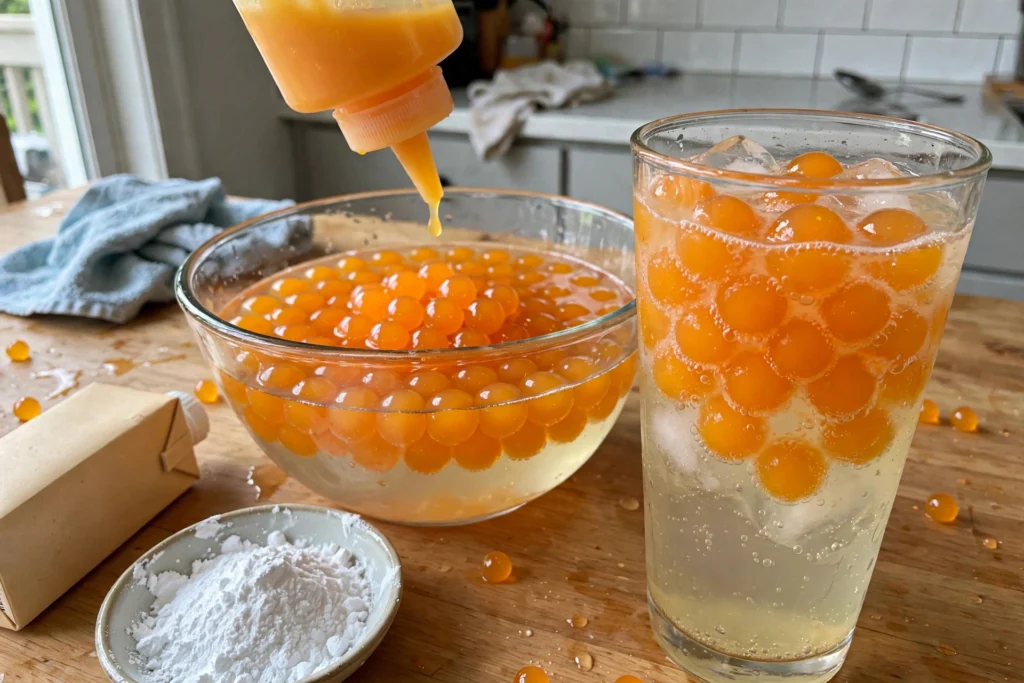
You know those little juice-filled bubbles that pop in your mouth at bubble tea shops? My kids are OBSESSED with them. So when I found out you can actually make popping boba at home with real fruit juice, I knew we had to try it — and let me tell you, the first time a homemade mango boba popped in my daughter's mouth, she lost her mind.
This uses a cool food-science trick called spherification. It sounds fancy, but it's really just: mix juice with sugar, stir in a natural seaweed powder, drip it into a calcium bath, and watch little pearls form. Kids love the "mad scientist" part, and the results are genuinely delicious.
Why You'll Love Making This
It's REAL food science you can eat. The kids aren't just crafting — they're learning how chefs make those fancy restaurant spheres, and they get to taste the experiment. My 9-year-old now explains spherification to her friends like she's on a cooking show.
And the flavor options are endless. Mango, strawberry, orange, apple — whatever juice you have. We made a whole flight of flavors one afternoon and did a family taste test. (Mango won. Mango always wins.)
Materials You'll Need
- 1 cup fruit juice, strained with no pulp (mango, strawberry, or orange work beautifully)
- 1 to 2 tablespoons sugar or sweetener (optional)
- 1/2 teaspoon sodium alginate (a natural seaweed-based powder — find it online or at specialty food stores)
- Gel food coloring or flavored extracts: optional, for extra fun
- 2 cups cold water (for the calcium bath)
- 1 teaspoon calcium lactate (or calcium chloride — the other magic powder, also easy to find online)
- Extra cold water: for rinsing
- A squeeze bottle or dropper
- A fine-mesh strainer or slotted spoon
- Two bowls
Sodium alginate and calcium lactate sound intimidating, but they're both natural, food-safe ingredients used in molecular gastronomy. One small bag of each lasts for dozens of batches.
Step-by-Step Directions
- In one bowl, mix the fruit juice with the sugar until the sugar dissolves. (Skip the sugar if your juice is already sweet enough.)
- Stir in the sodium alginate until it is fully blended and smooth.
- In the second bowl, stir the calcium lactate into the 2 cups of cold water. This is your calcium bath.
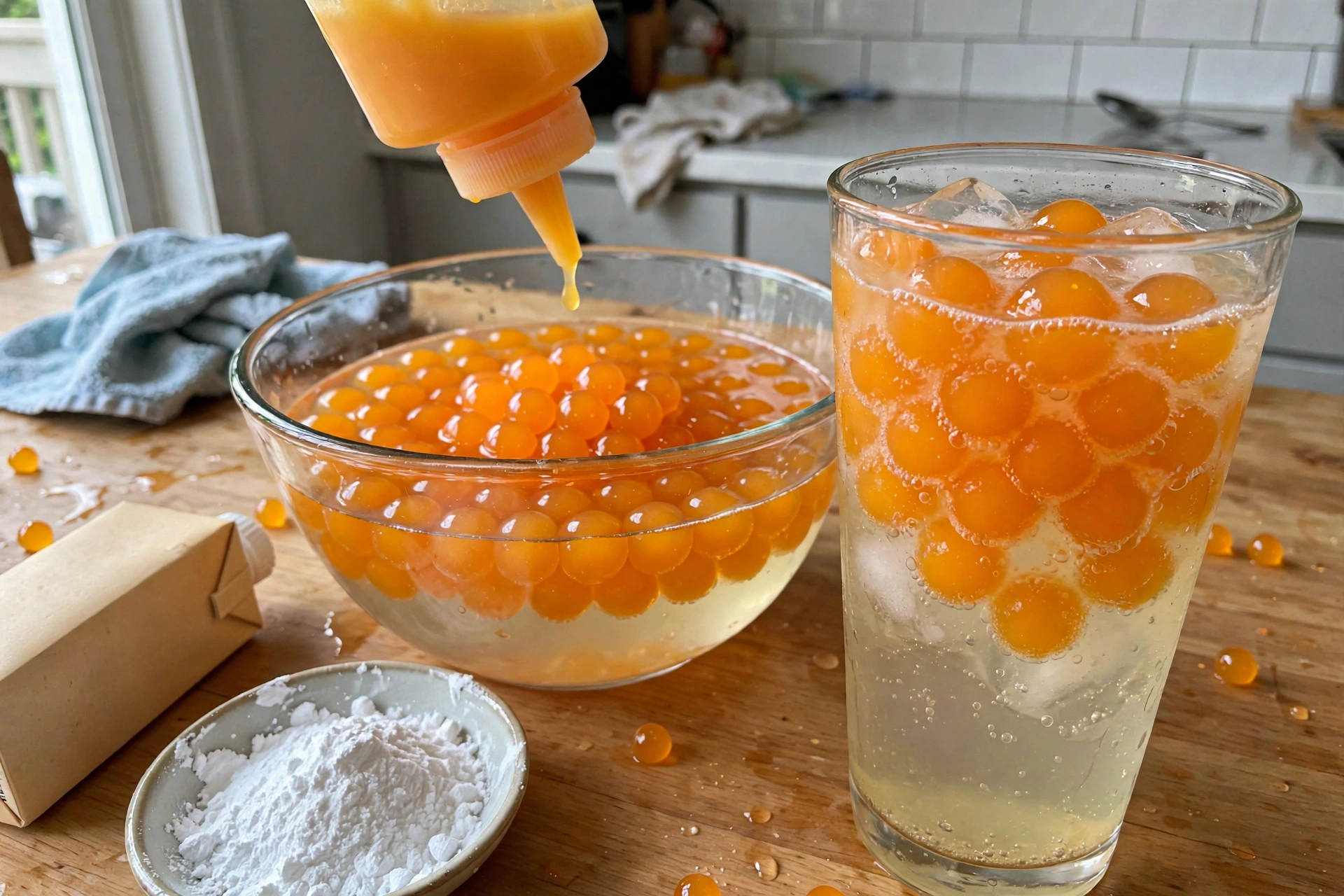
- Fill the squeeze bottle or dropper with the juice mixture, then drip it into the calcium bath, drop by drop. Watch the little pearls form!
- Let the pearls sit in the bath for a couple of minutes.
- Scoop them out with the fine-mesh strainer or slotted spoon and rinse them gently in cold water.
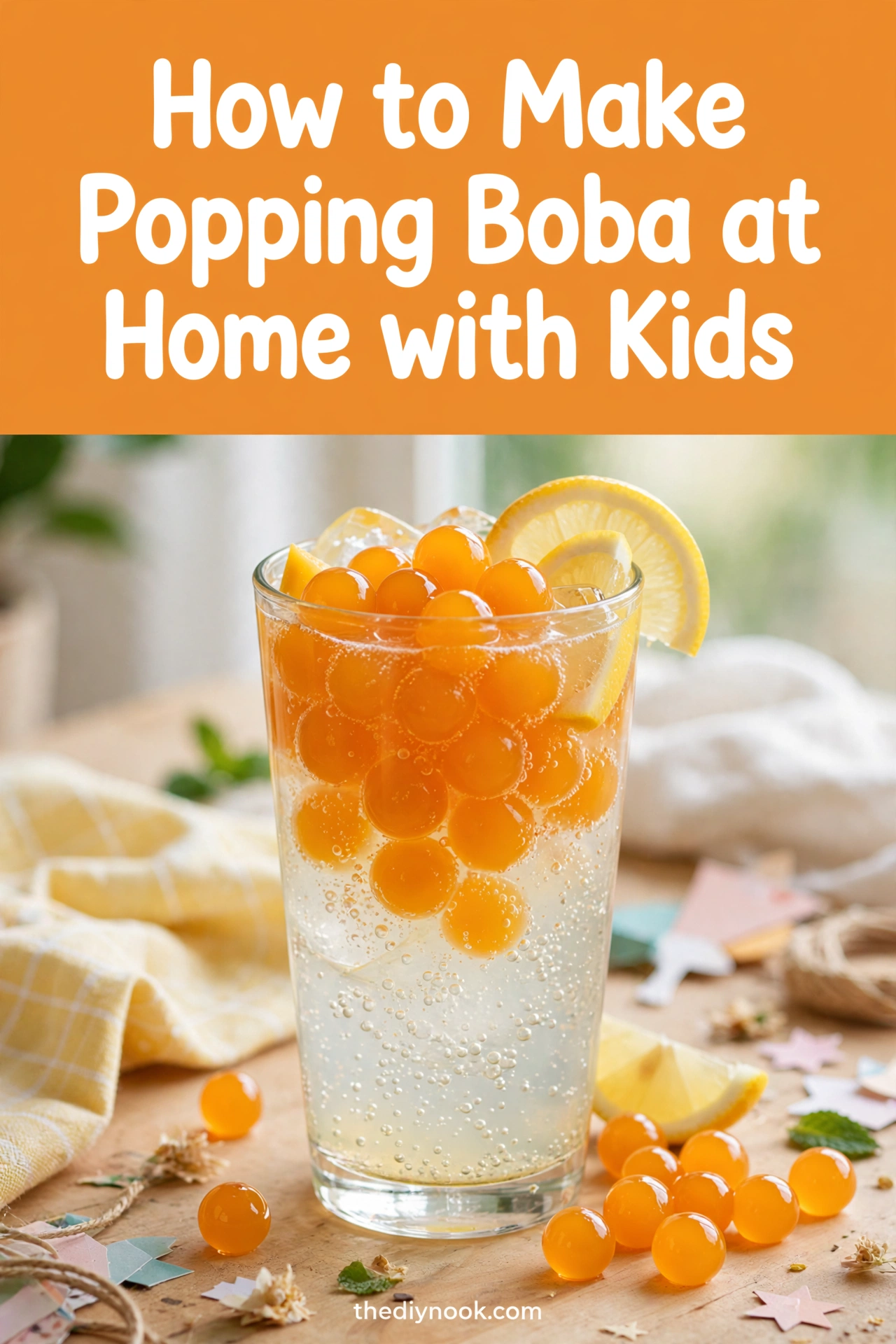
- Serve them up! Drop them into lemonade, iced tea, sparkling water, or just eat them by the spoonful. Use them within 24 hours for the best texture and flavor.
Tips If Things Go Sideways
Pearls coming out flat or tadpole-shaped? Drip closer to the surface of the bath so the drops stay round.
Pearls breaking apart? The juice mixture might not be fully blended. Stir the sodium alginate in well and make sure your juice is pulp-free and strained.
Skin too thick and chewy? Don't leave the pearls sitting in the bath too long. A couple of minutes is plenty for that perfect thin pop.
Lumpy mixture? Keep stirring until the sodium alginate is completely blended in — no shortcuts here.
Fun Variations to Try
- Make a rainbow flight: mango (orange), strawberry (pink), and kiwi (green) boba side by side.
- Drop the finished boba into sparkling lemonade for a fizzy popping drink.
- Try coconut water as the juice base for a tropical twist.
- Layer different flavors in a clear glass for a gorgeous ombre drink.
FAQs
What ages is this good for?
Ages 8 and up for the full process with supervision. Younger kids can help with the dripping (the fun part!) and definitely with the taste-testing.
Is sodium alginate safe to eat?
Yes! It's a natural extract from brown seaweed, widely used in food — it's in lots of ice creams and sauces you already buy. Calcium lactate is also food-safe.
How long does homemade popping boba last?
Use it within 24 hours for the best texture and flavor. The skins keep thickening over time, so day-old boba gets chewy instead of poppy. Make only what you'll use.
Can I use juice with pulp?
Pulp-free juice gives the smoothest, roundest pearls. Pulp can clog droppers and make lumpy boba. Strain pulpy juice first if that's what you have.
Where do I buy sodium alginate and calcium lactate?
Online (search "molecular gastronomy kit" — they often come as a pair), specialty food stores, or some well-stocked health food shops. One purchase lasts ages.
Can I make the pearls bigger?
Yes! Use a small rounded spoon instead of a dropper to make larger spheres. They need an extra 30 seconds in the calcium bath to set properly.

 How to Make Popping Boba at Home with Kids
 Easy Fizzy Kool-Aid Lollipops for Kids
 Easy Edible Sugar Bowls for Kids
 Easy Mad Scientist Potion Drink for Kids
Leave a Reply