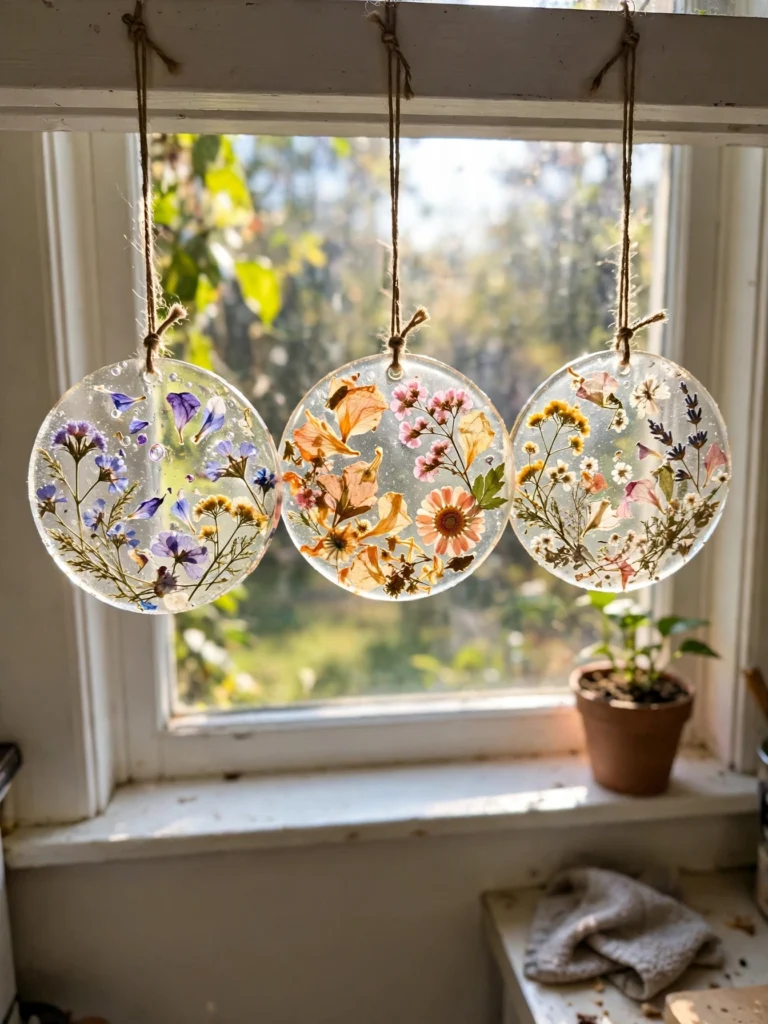
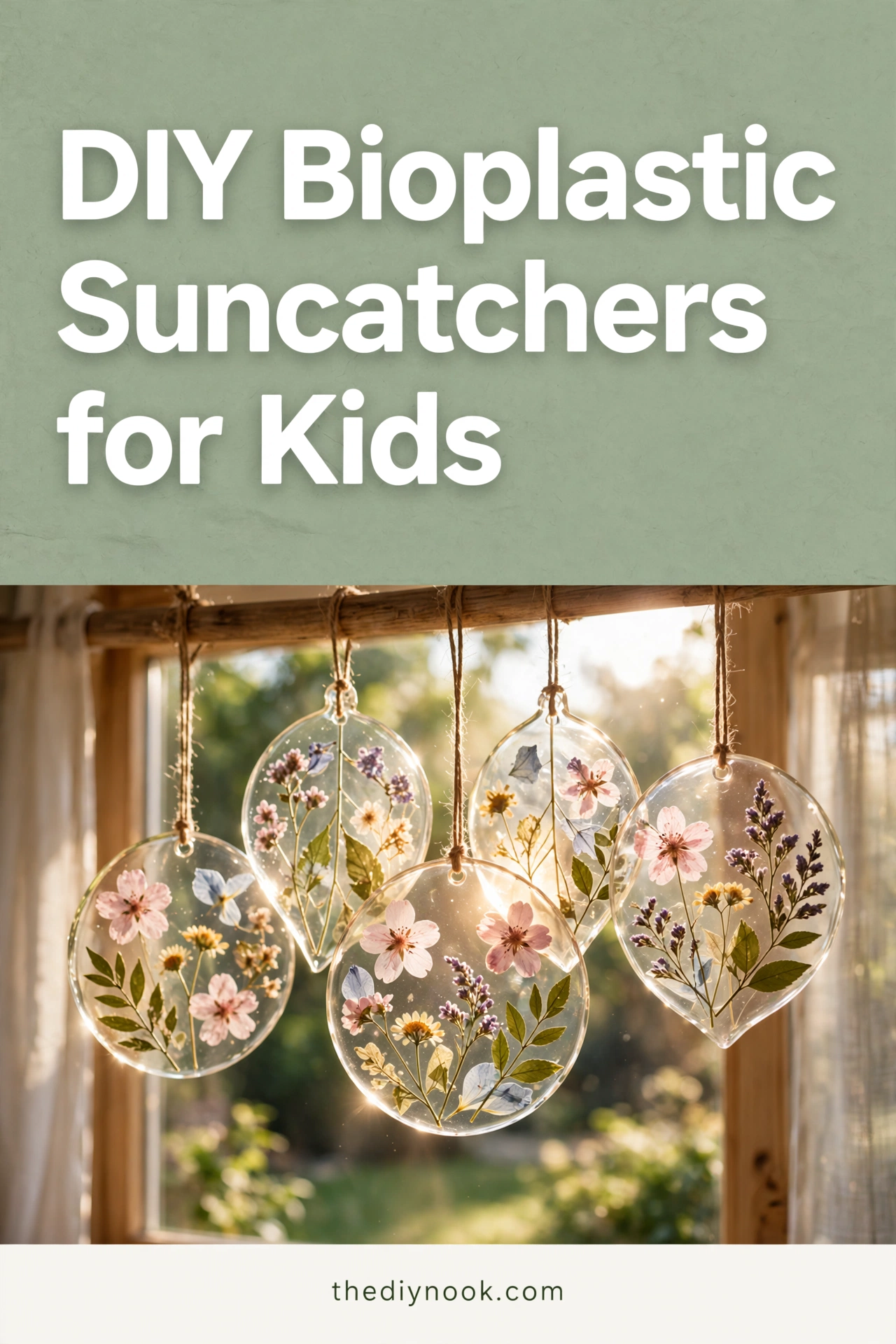
Have you ever heard of bioplastic? It's a real thing scientists make from plants — and you can make a kid-friendly version right in your kitchen with cornstarch! We cooked up a batch, pressed wildflowers into it, and hung the finished pieces in our sunniest window. They glow like stained glass.
There's one short grown-up step at the stove, and then the kids take over. It's part science lab, part art studio, and the results are genuinely beautiful.
Why You'll Love Making This
This one feels like a real experiment — measuring, stirring, watching a cloudy mixture turn clear and glossy on the stove. My kids were fascinated, and I loved that everything we used came from the kitchen cabinet. No weird chemicals, nothing to buy specially.
And the finished suncatchers are the real deal. Light shines through them like colored glass, with the flowers suspended inside. We made a whole garland of them, and they make me smile every single morning.
Materials You'll Need
- Cornstarch
- Food-grade glycerin
- White vinegar
- Water
- Small saucepan (nonstick or heavy-bottom works best)
- Parchment paper or a silicone mat
- Small fresh flowers and petals (wildflowers, violets, and tiny daisies are perfect)
- Scissors
- Hole punch or a skewer (for the hanging hole — grown-up job)
- String or ribbon for hanging
Step-by-Step Directions
- Prep your workspace: lay down parchment paper or a silicone mat, and trim your flowers, keeping the smallest, flattest petals.
- In a bowl, combine cornstarch, glycerin, vinegar, and water, and stir until completely smooth with no lumps. It should look like a thin paste.
- Grown-up step: pour the mixture into a saucepan and heat on low to medium, stirring constantly, until it turns clear and glossy.
- Working quickly but gently, pour a thin layer (about the thickness of a nickel) onto your parchment paper.
- While it's still warm and liquid, arrange your flower petals on top, pressing them in lightly. Don't trap air bubbles underneath!
- Let the sheet cool until it's firm to the touch, then peel it up slowly from the parchment.
- Trim the edges into circles, hearts, or any shape you like with scissors.
- Punch a small hole near the top (a grown-up can use a heated skewer), thread through string or ribbon, and hang in a sunny window to finish drying.
Tips for the Best Results
Work fast once the mixture comes off the stove — it starts setting as it cools. If your first one has bubbles or wobbly edges, don't worry: handmade-looking is part of the charm, and you'll get better with each pour. Keep kids at a safe distance during the hot saucepan step.
Fun Variations to Try
Press in tiny leaves, ferns, or even flower petals arranged into patterns and mandalas. Try tinting the mixture with a drop of food coloring for colored "glass," or sprinkle in a little biodegradable glitter before it sets for extra sparkle.
FAQs
What exactly is bioplastic?
It's a plastic-like material made from natural ingredients (like cornstarch) instead of petroleum. Scientists use the same idea to make eco-friendly packaging!
How long do these suncatchers last?
With gentle handling, they last for months. Keep them out of rain and prolonged harsh sun, which can fade the flowers over time.
Can kids do the stove step?
No — an adult should handle the hot saucepan. Kids can do everything else: measuring, stirring the cold mixture, arranging flowers, and trimming.
What if my mixture is lumpy?
Stir really well before heating, and keep stirring constantly on the stove. Small lumps make the texture uneven, so take your time with the cold mixing step.
Where's the best place to hang them?
A sunny window where light streams through — that's when they truly glow. A suction-cup hook works perfectly.

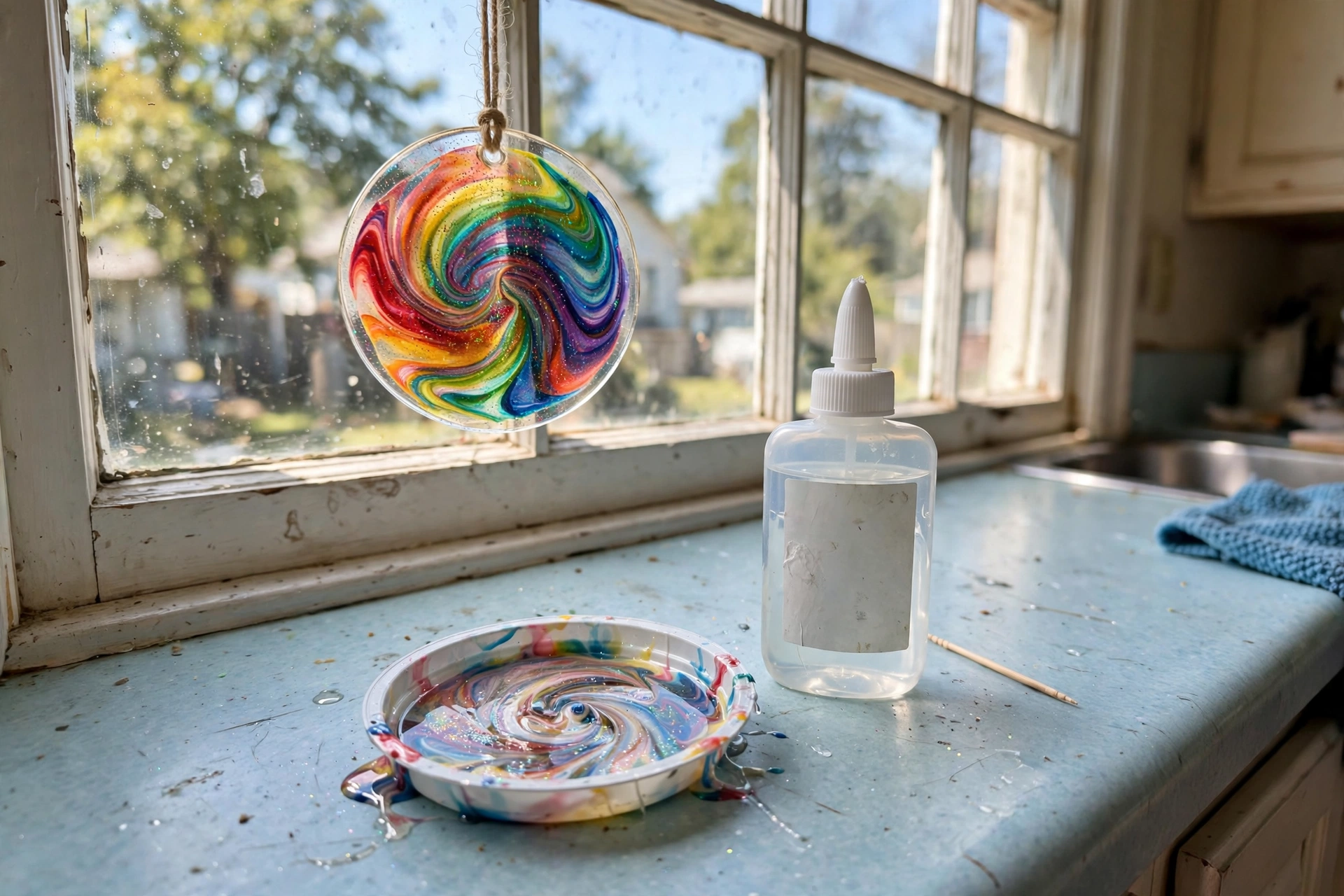 DIY Plastic Lid Suncatchers for Kids
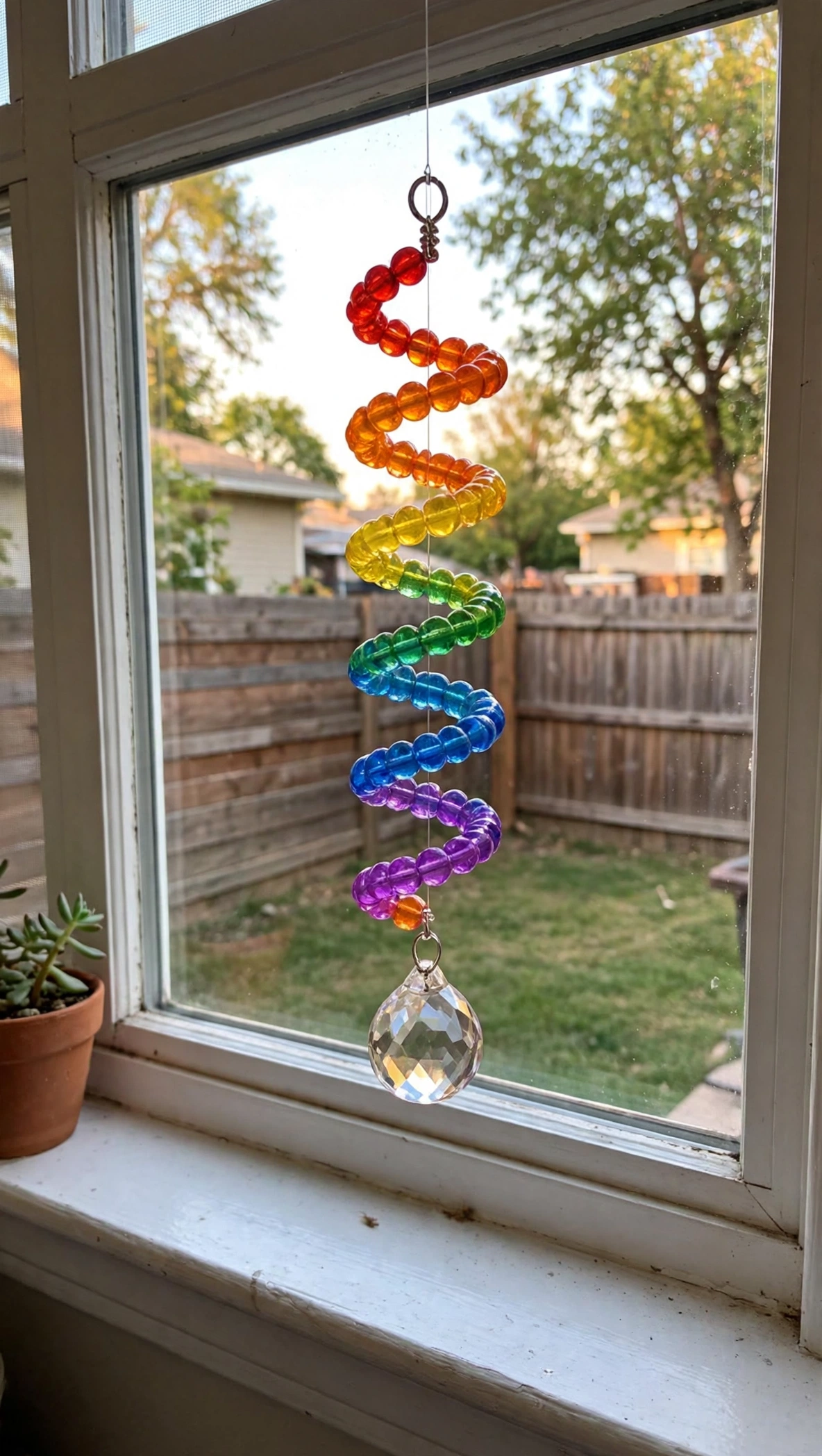 Easy Rainbow Bead Spiral Suncatcher for Kids
 Easy Clear Glue Suncatcher Craft for Kids
 Easy CD Suncatchers: Swirly Rainbows for Kids
Leave a Reply