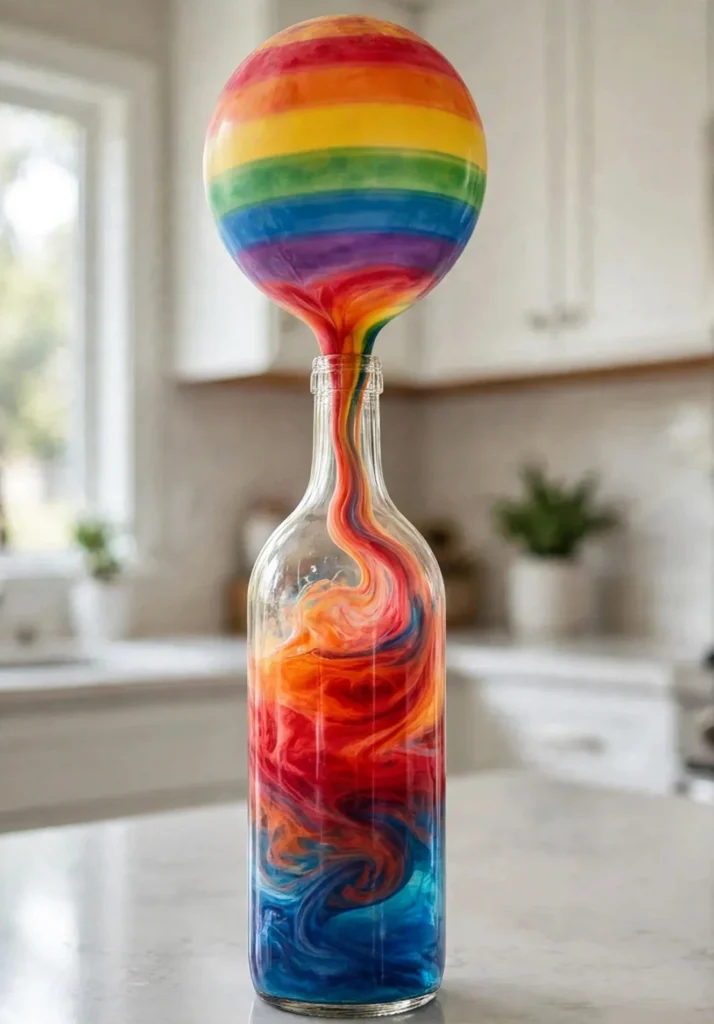
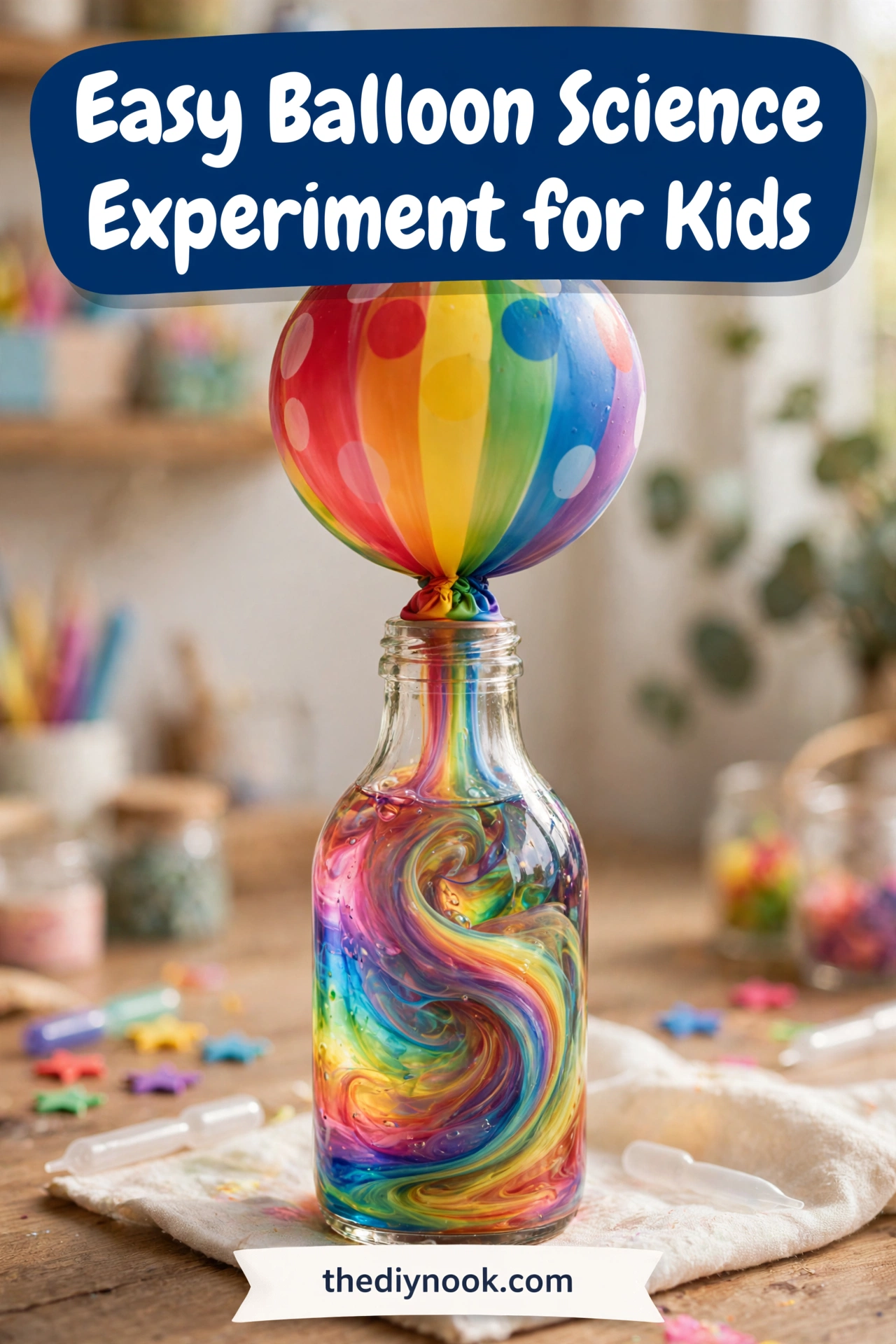
If your kids have never watched a balloon inflate itself, oh, they are in for a treat. This baking soda and vinegar experiment is the one I pull out when I want big wow-factor with almost zero prep. You mix two ordinary kitchen ingredients, and suddenly — fizz, bubble, WHOOSH — the balloon puffs right up like magic. Except it's not magic, it's science, and your kids get to be the scientists.
I've done this one at the kitchen table, in classrooms, and at birthday parties, and it lands every single time. Let's get bubbly.
Why You'll Love Making This
First, the setup takes about five minutes with things you already own. No special kit, no confusing instructions, no expensive supplies. Just a bottle, a balloon, and two pantry staples. That alone makes it a weeknight hero in my house.
Second, it sneaks real learning into the fun. While your kids are giggling at the fizzing, they're actually watching an acid-base chemical reaction create carbon dioxide gas — the invisible force that inflates the balloon. It's the kind of "wait, really?!" moment that sticks with them way longer than a worksheet ever could.
Materials You'll Need
- Balloons — a few, in different sizes if you have them
- Baking soda — about 2 tablespoons per balloon
- Vinegar — about 1/2 cup per bottle
- Funnel — for getting the baking soda into the balloon
- Empty plastic bottle — a clean soda or water bottle works perfectly
- Food coloring — a few drops, optional but so much fun
- Measuring spoons — for the baking soda
Step-by-Step Directions
- Gather all your materials and set them out on the table so everything is within reach before you start.
- Stretch a balloon over the end of the funnel and pour about 2 tablespoons of baking soda into it, then gently shake the powder down into the bottom of the balloon.
- Pour about 1/2 cup of vinegar into the empty plastic bottle, adding a few drops of food coloring if you want a colorful reaction.
- Carefully stretch the mouth of the balloon over the mouth of the bottle, making sure none of the baking soda tips in yet — pinch the balloon closed at the neck if you need to.
- When everyone is watching, lift the balloon upright and let the baking soda drop down into the vinegar.
- Watch the fizzing reaction create gas that inflates the balloon right before your eyes, and talk about what just happened.
Tips and Variations
Try this experiment with different amounts of baking soda and vinegar and have the kids predict which combo inflates the balloon fastest — instant science fair energy. Swap in small and large balloons to compare results, or add a squirt of dish soap to the vinegar for an extra-foamy eruption. Different food coloring makes each round feel brand new.
FAQs
What is actually happening in this experiment?
Baking soda is a base and vinegar is an acid. When they meet, they react and release carbon dioxide gas. The gas has nowhere to go, so it rushes up and inflates the balloon.
What happens if I use too much baking soda or vinegar?
You'll get a bigger, faster reaction — and possibly an overflow mess. Start with the suggested amounts and scale up slowly. Doing this over a tray or outside makes cleanup easy.
Can young children do this safely?
Yes, with adult supervision. The ingredients are non-toxic, but little hands should let a grown-up handle pouring the vinegar and stretching the balloon over the bottle.
Why isn't my balloon inflating?
The most common culprit is baking soda stuck in the neck of the balloon — give it a gentle shake so it all drops into the vinegar. Also check that the balloon is sealed snugly around the bottle mouth so gas can't escape.
Can I reuse the mixture for a second round?
Once the fizzing stops, the reaction is done. Rinse the bottle and start fresh with new baking soda and vinegar for round two.
Does the balloon stay inflated?
It will stay puffed up for a while since the carbon dioxide is trapped inside, but it will slowly deflate over a few hours as gas seeps through the balloon.

 Easy Seashell Crystal Geodes for Kids
 DIY Lava Lamp with Alka-Seltzer for Kids
 Easy Crystal Growing Experiment for Kids
 Easy Glowing Rainbow Thundercloud in a Jar for Kids
Leave a Reply