
You guys, I have a new favorite rainy-day ritual and it starts with a packet of gelatin from the pantry. These DIY bioplastic suncatchers are made from simple kitchen ingredients, and when they dry they turn into the prettiest little translucent disks that catch the light like stained glass. My kids pressed tiny flowers and leaves into theirs, and now our kitchen window looks like a little art gallery.
Fair warning: the drying takes patience (overnight is best), but the hands-on part is only about 20 minutes, and stirring that warm mixture is weirdly soothing. This one is perfect for slowing down together on a hectic day.
Why You'll Love Making This
First, you probably already own everything you need. Gelatin, water, a saucepan — that's the whole supply list before the fun extras. No craft store run, no twenty-dollar kit, just pantry staples and whatever pretty bits you find in the backyard.
Second, this craft doubles as a tiny science lesson without anyone noticing. The kids watched the liquid turn into a wobbly sheet and then a firm, glassy disk, and they were genuinely fascinated. Pressing flowers into the surface while it's still warm feels like magic every single time.
Materials You'll Need
- Unflavored gelatin — 1 tablespoon per suncatcher
- Distilled water — 3 tablespoons per tablespoon of gelatin
- Glycerin, a few drops (optional, keeps the finished piece flexible)
- A small saucepan
- Wooden spoon
- Silicone mat or parchment paper for drying
- Cookie cutters or small molds (optional, for fun shapes)
- Food coloring or natural pigments (optional)
- Dried flowers, pressed leaves, or tiny botanical bits
- A straw or skewer for poking a hanging hole
- Tweezers for placing the decorations
- Ribbon, string, or fishing line for hanging
Step-by-Step Directions
- Gently stir 1 tablespoon of gelatin into 3 tablespoons of distilled water in the saucepan. Let it sit for a minute to bloom.
- Warm the pan over low heat, stirring slowly with the wooden spoon until the grains dissolve and the mixture turns clear and smooth. (Adults handle this step — it's hot!)
- While the mixture is still warm, stir in a few drops of glycerin and a drop or two of food coloring if you want tinted suncatchers.
- Take the pan off the heat and let it cool for a minute or two, until it's warm but comfortable on the back of your hand.
- Spoon a small puddle onto your silicone mat or parchment paper and spread it gently into a circle, or pour it into a cookie cutter.
- While the surface is still soft, use tweezers to press dried flowers or leaves onto it, nudging them flat.
- Poke a hanging hole near the top edge with a straw or skewer while the bioplastic is still soft.
- Cover loosely with a clean cloth and let the pieces dry at room temperature for several hours or overnight, until firm and slightly springy.
- Carefully peel each suncatcher off the mat, working from one edge and lifting slowly.
- Thread ribbon or fishing line through the hole, tie a knot, and hang your suncatcher where the light can shine through it.
Tips & Variations
Layer two thin pours for extra depth — let the first get tacky, then add a second color on top. Beet juice or spinach juice gives the softest natural tints if you want to skip food coloring. And tiny star or heart shapes tucked into a birthday card make the sweetest handmade gift. Store finished suncatchers flat, away from heat and humidity, and they'll stay pretty for months.

FAQs
Is this safe for kids to make?
Yes, with supervision. Kids can stir the cool mixture, place decorations, and poke holes — just have an adult handle the hot saucepan step and set clear rules about what's hot.
How long do they take to dry?
Usually several hours to overnight, depending on thickness and humidity. Thinner pours dry faster, so keep each suncatcher small and thin.
Can I make them without glycerin?
Absolutely. Glycerin just keeps the finished piece a little flexible. Without it, the suncatchers dry stiffer and more glass-like.
Will they melt in a hot car?
They can soften in high heat, so keep them indoors in a steady-temperature spot. Avoid radiators, hot stoves, and very damp rooms.
Can I use fresh flowers instead of dried?
Stick with fully dried or pressed flowers. Fresh ones trap moisture inside and can cause dark spots or mold. Press them between book pages for a few days first.
Are they eco-friendly?
Yes — they're made from natural, biodegradable ingredients, which is one of the best things about this craft.

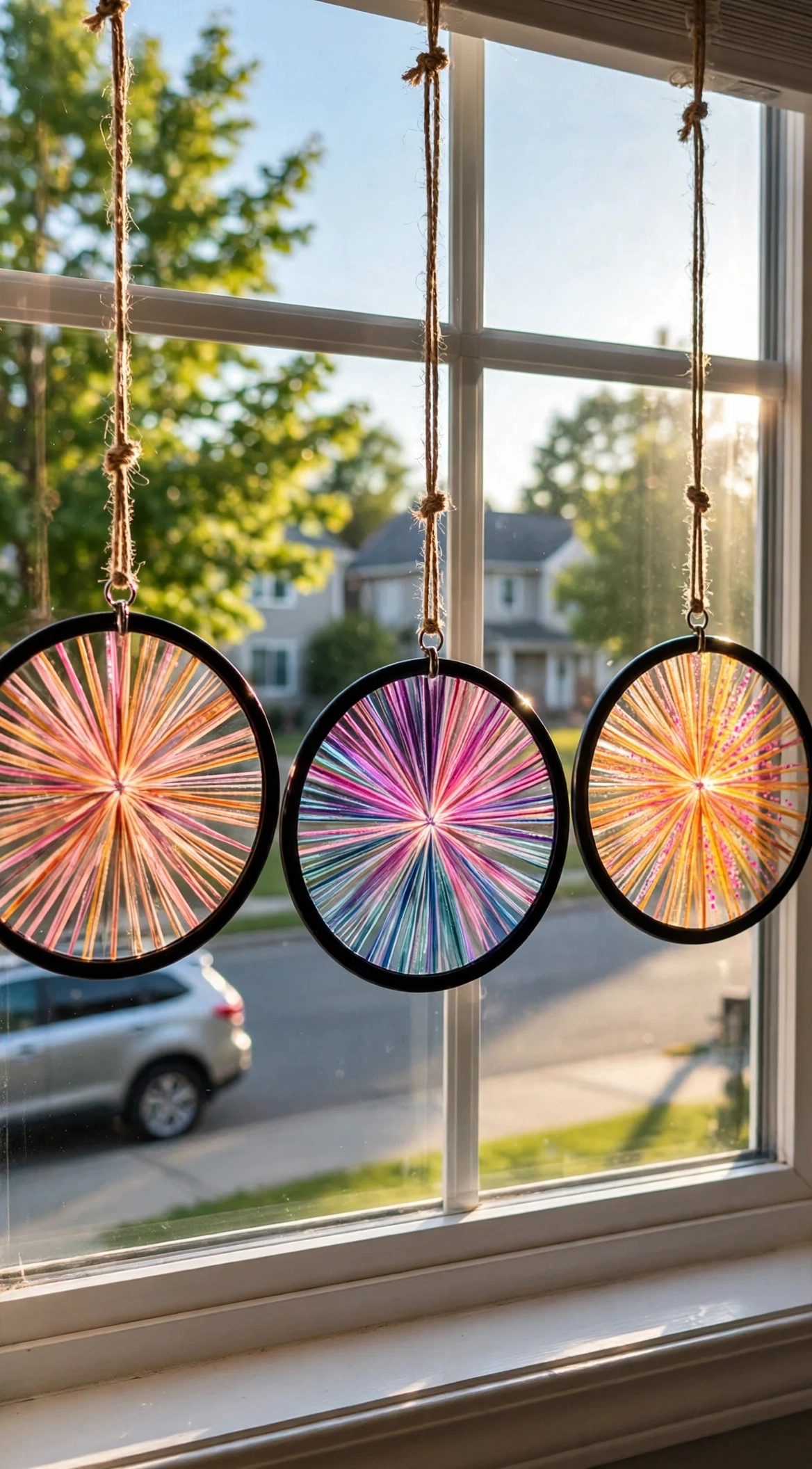 DIY Stained Glass Suncatcher Craft for Kids
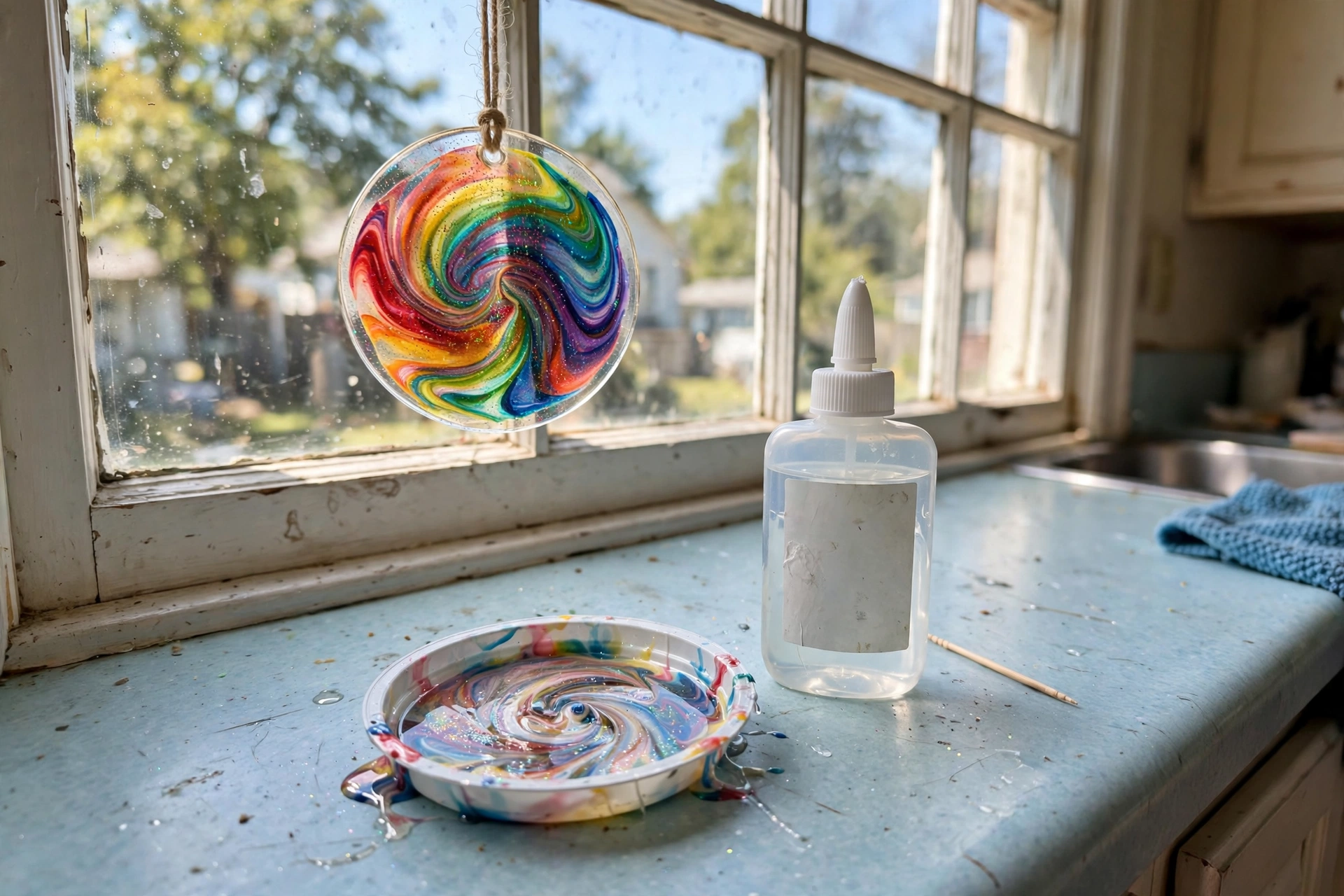 DIY Plastic Lid Suncatchers for Kids
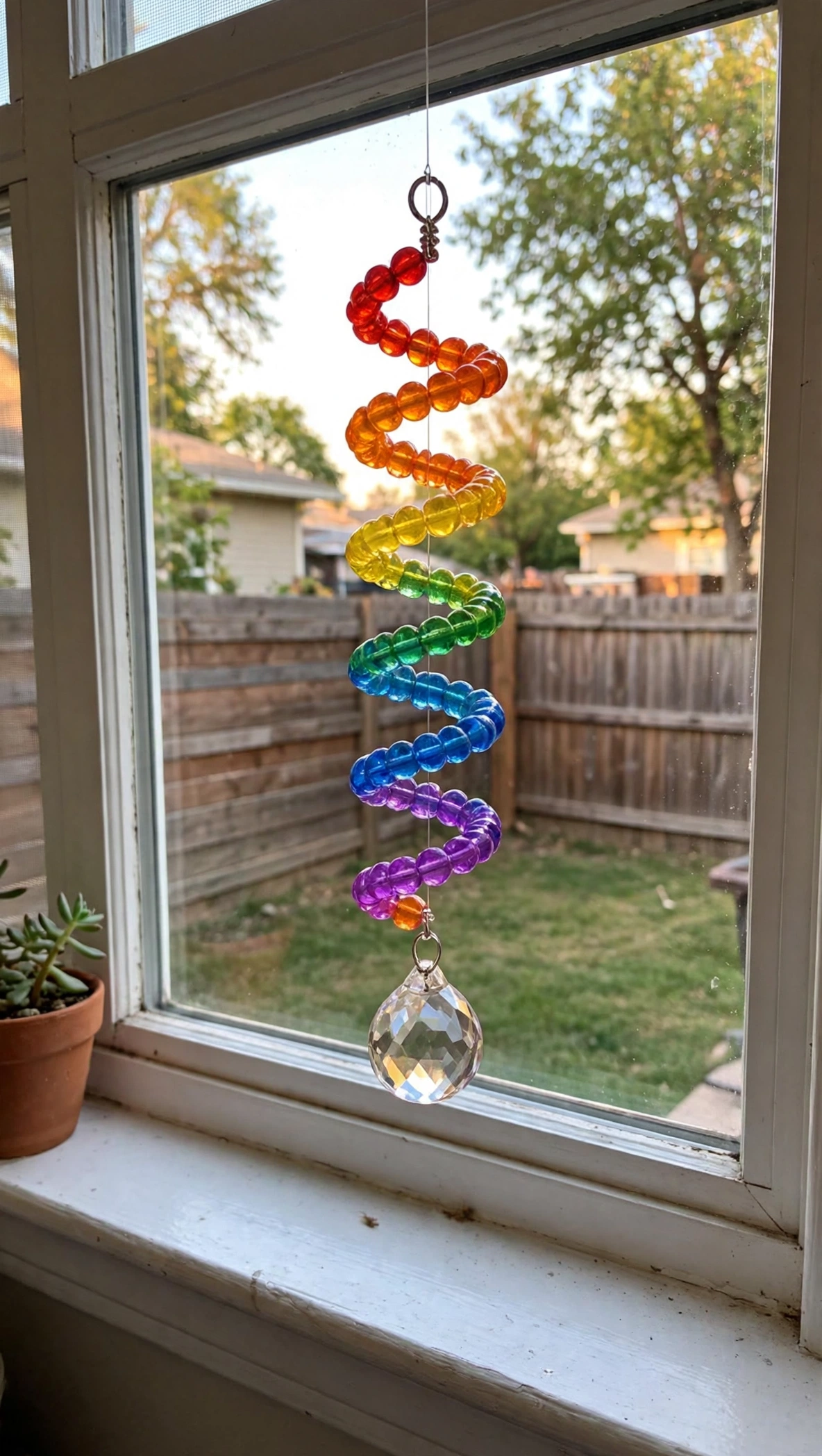 Easy Rainbow Bead Spiral Suncatcher for Kids
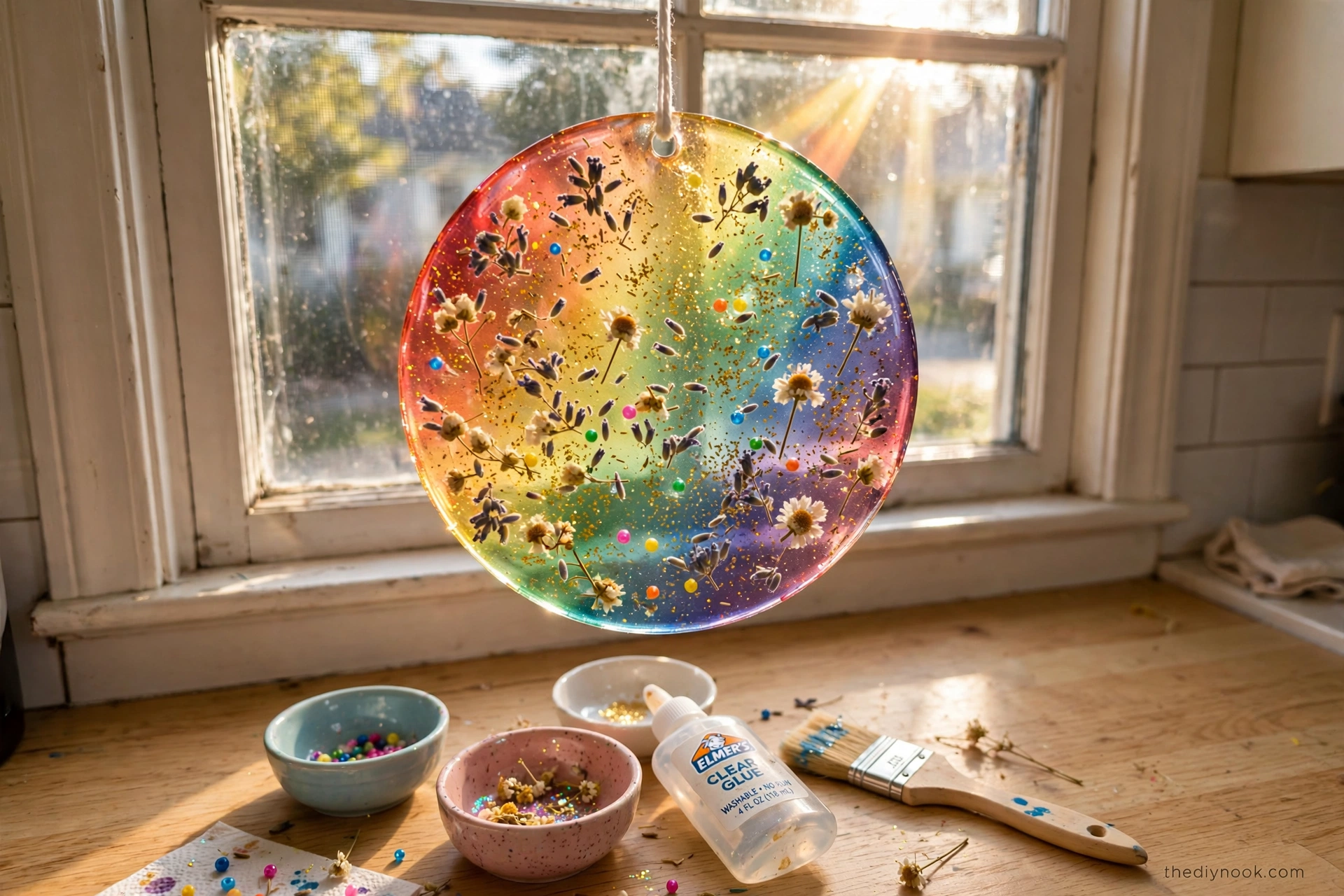 Easy Clear Glue Suncatcher Craft for Kids
Leave a Reply