
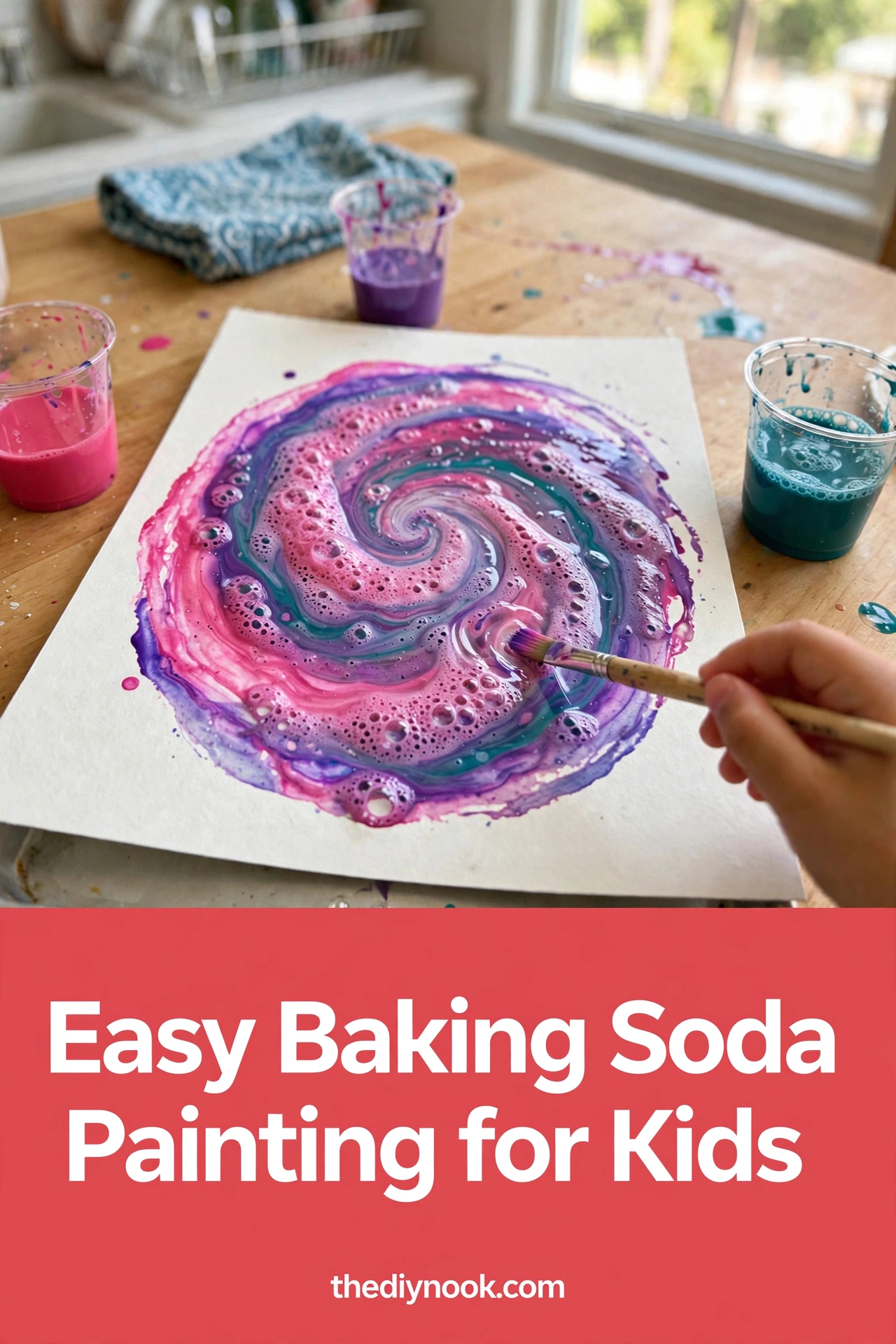
Art that fizzes when you touch it — that is the kind of thing that makes kids gasp out loud. We paint with a simple baking soda mixture, add watercolors, then drip vinegar over the top and watch the whole painting bubble and come alive. My kids demanded to do it three times in a row the first afternoon we tried it.
Every material comes straight from the kitchen, so this is the perfect project for a day when you want something wonderful with zero prep.
Why You'll Love Making This
It is art and science in a single sitting, which means it keeps both the creative kid and the experimental kid completely engaged. The painting phase is calm and artsy, and then the vinegar phase turns into a fizzing, bubbling surprise that never gets old.
The results are genuinely beautiful too. The baking soda leaves a crystalline, textured finish that makes watercolors look luminous. Even the most enthusiastic toddler scribbles dried into something I was happy to hang on the fridge.
Materials You'll Need
- Baking soda — 1 cup
- Water — 1 cup, for the baking soda mixture
- White vinegar — 1 cup, for the painting reaction
- Food coloring or liquid watercolors — for color
- Paintbrushes — a few different sizes
- Small cups — for mixing colored vinegar
- A tray or shallow dish — to contain the fizz
- Thick paper or canvas — thin paper will warp and tear
Step-by-Step Directions
- In a bowl, stir 1 cup of baking soda with 1 cup of water until it is fully dissolved.
- Pour the baking soda mixture into your tray or shallow dish.
- In small cups, mix 1 cup of white vinegar with a few drops of food coloring or liquid watercolors, stirring to blend each color.
- Dip a paintbrush into the colored vinegar and brush it over the baking soda mixture on the paper.
- Watch it fizz and bubble, creating swirling, mesmerizing patterns as the colors blend.
- Keep layering colors until you love what you see, then let the artwork dry completely.
- Admire the unique crystalline textures that develop as it dries.
Tips for the Best Fizzy Paintings
Thick paper is non-negotiable — regular printer paper wrinkles and tears under all that liquid. A squeeze bottle or medicine dropper gives kids much better control than a brush for the vinegar stage, and they will fight over who gets it. Try sponge brushes or cotton swabs too, for completely different textures.
Drying takes a few hours to a full day depending on how wet the painting got. Once it is fully dry, a light coat of clear acrylic spray will preserve it for keeps.
Fun Variations to Try
Plan color themes for holidays — red and green for Christmas, pastels for spring. Paint a night sky with dark blues and purples, then add the vinegar and watch it turn into a galaxy. For a secret-message trick, paint with the baking soda mixture on white paper, let it dry, then brush watercolors over the whole sheet and watch the hidden message resist the paint and appear.
FAQs
Is this safe for toddlers?
Yes, every ingredient is a kitchen staple and non-toxic. Supervise so little ones do not drink the vinegar, but the materials themselves are safe.
What if I do not have vinegar?
Lemon juice works as a substitute — it creates the same fizzing reaction with the baking soda.
What kind of paper should I use?
Thick watercolor paper or canvas is best. Thin paper warps, tears, and frustrates little artists.
Can I preserve the finished artwork?
Yes. Once it is completely dry, seal it with a clear acrylic spray to protect the texture and colors.
How long does it take to dry?
Anywhere from a few hours to a full day, depending on how much liquid you used. Thicker paintings take longer.
Can I adjust the fizz?
Absolutely — experiment with the baking soda to vinegar ratio. More baking soda gives a gentler fizz; more vinegar gives a dramatic bubbling reaction.

 Easy Seashell Crystal Geodes for Kids
 DIY Lava Lamp with Alka-Seltzer for Kids
 Easy Crystal Growing Experiment for Kids
 Easy Glowing Rainbow Thundercloud in a Jar for Kids
Leave a Reply