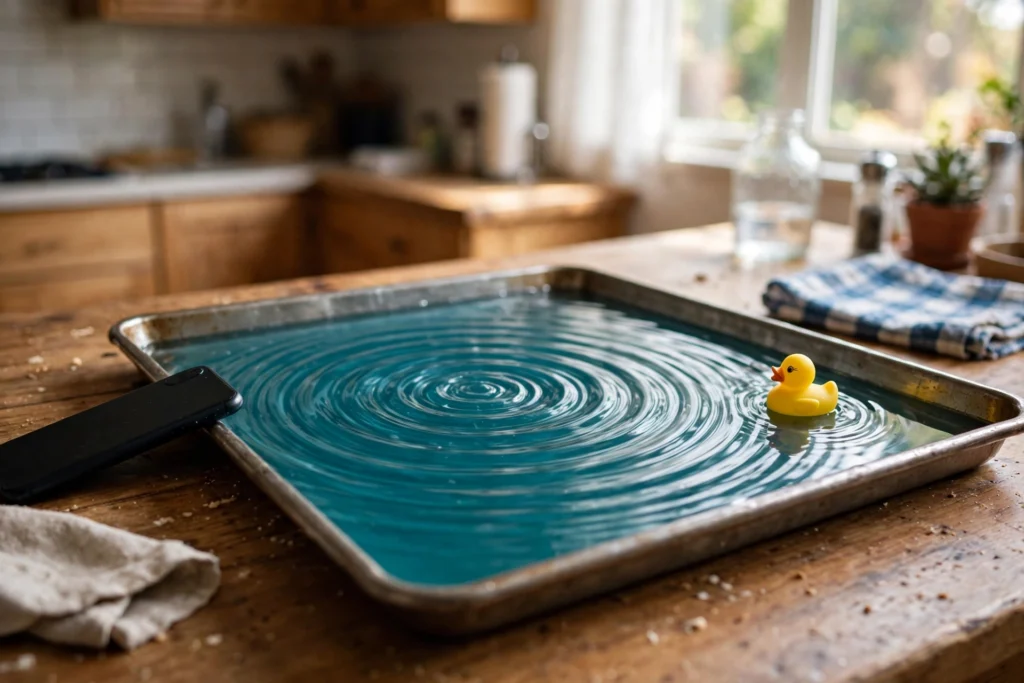
The first time we did this one, my son's jaw literally dropped. A bowl of water, a phone playing a low hum, and suddenly the water starts dancing in patterns like a tiny alien landscape. He whispered, "That's SOUND doing that?" Yes, buddy. That's sound doing that.
This sound wave water experiment is physics you can see. Sound is just vibration moving through air, and when those vibrations hit water, they make ripples and standing-wave patterns. It's five minutes to set up, it's free, and it will make your kids look at music differently forever.
Why You'll Love Making This
There is zero prep. Bowl, water, phone — that's the whole materials list. It's the experiment I pull out on rainy afternoons when everyone's bored and I'm out of ideas.
It also has that rare quality of being genuinely amazing for adults too. My husband, who is not easily impressed by kid science, stood there for ten minutes going "whoa" at different frequencies.
Materials You'll Need
- A shallow dish, bowl, or baking tray
- Water
- A phone or small Bluetooth speaker
- An audio app that can play tones (search "frequency generator" in your app store — free ones work great)
- Food coloring, optional for prettier patterns
- A towel for drips
Step-by-Step Directions
- Place your dish on a flat, stable surface and put a towel under it.
- Pour in about an inch of water. Add a drop or two of food coloring if you like.
- Open your frequency generator app and set it to a low tone, like 50 Hz.
- Set your phone face-down right at the edge of the dish (or rest a small speaker against the dish's side).
- Turn the volume up to a medium level and watch the water's surface.
- Slowly change the frequency — try 100 Hz, 200 Hz, 400 Hz — and watch the patterns change.
- Try different volumes too. Louder sounds make bigger waves.
- Bonus: float a tiny rubber duck or bottle cap and watch it bounce along with the waves.
Tips If Things Go Sideways
No ripples? Turn the volume up, or get the speaker physically closer to (or touching) the dish. The vibration needs to reach the water.
Patterns look muddy? Still the water between tries — let it settle for a few seconds, then start the new tone.
Phone getting wet? Keep it at the dish's edge, not over the water. A plastic bag over the phone works as a splash shield.
Fun Variations to Try
- Compare water, milk, and oil — they all respond differently to the same sound.
- Sprinkle glitter on the surface and watch it migrate into patterns.
- Play a song instead of a pure tone and watch the chaos.
- Put plastic wrap loosely over the dish and watch the water dance against it.
<p><img src="https://thediynook.com/wp-content/uploads/2026/09/pin-v1-94.webp" alt="Sound Wave Water Experiment for Kids" /></p>
FAQs
What frequency works best?
Start between 20 and 500 Hz. Lower frequencies make bigger, slower waves; higher ones make tight, busy patterns. Experiment — that's the point.
Is this safe for my phone?
Keep the phone at the edge of the dish, not over the water. Splatters happen, so a towel and a little distance are wise.
Can we do this as a science fair project?
Absolutely. Photograph the patterns at different frequencies and compare — it's a great visual project.
Do I need a special app?
Any free "frequency generator" or "tone generator" app works. YouTube also has pure-tone videos for specific frequencies.
Why does the water make patterns?
Sound waves vibrate the dish and the water. At certain frequencies, the waves reinforce each other in some spots and cancel out in others — that's what makes the standing-wave patterns you see.

 Shaving Cream Rain Cloud Science Experiment
 Calm Color-Mixing Butterfly Science Craft
 Easy Fizzing Ice Cubes Experiment for Kids
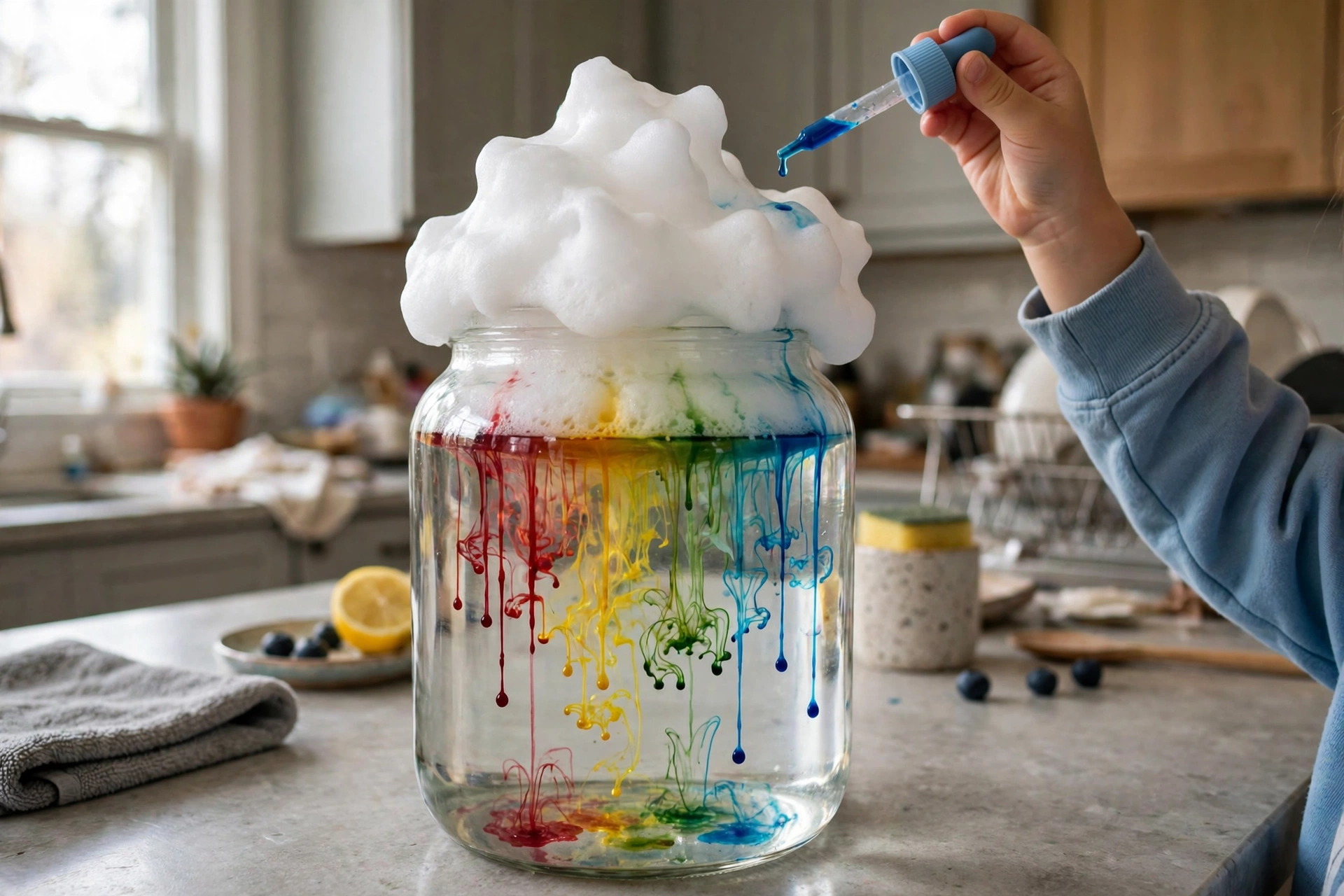 Easy Rainbow Rain Cloud Experiment for Kids
Leave a Reply