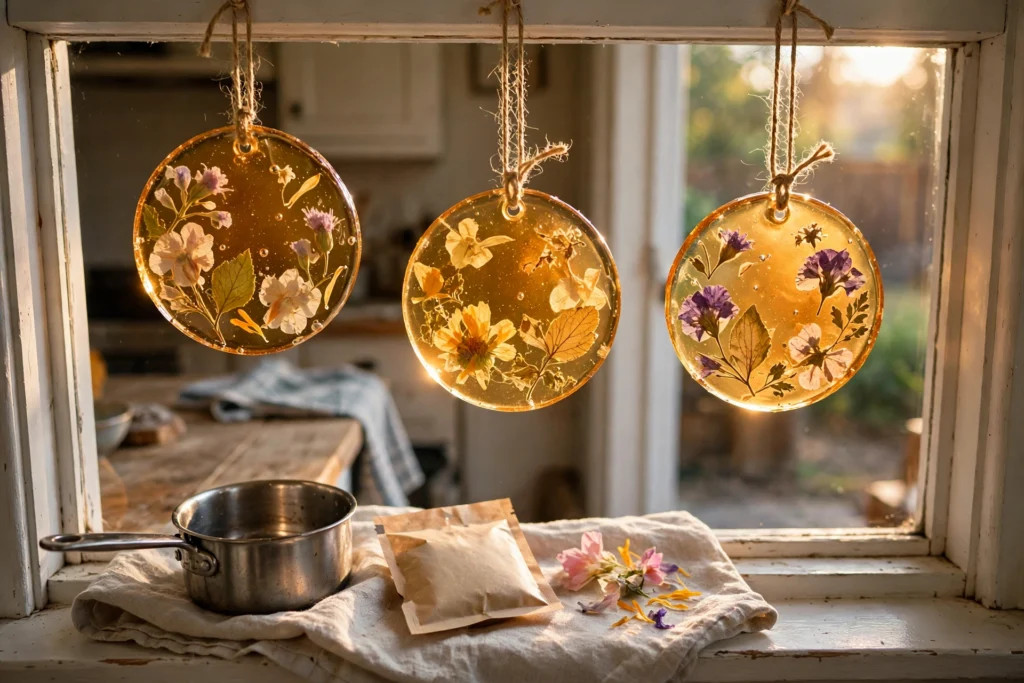
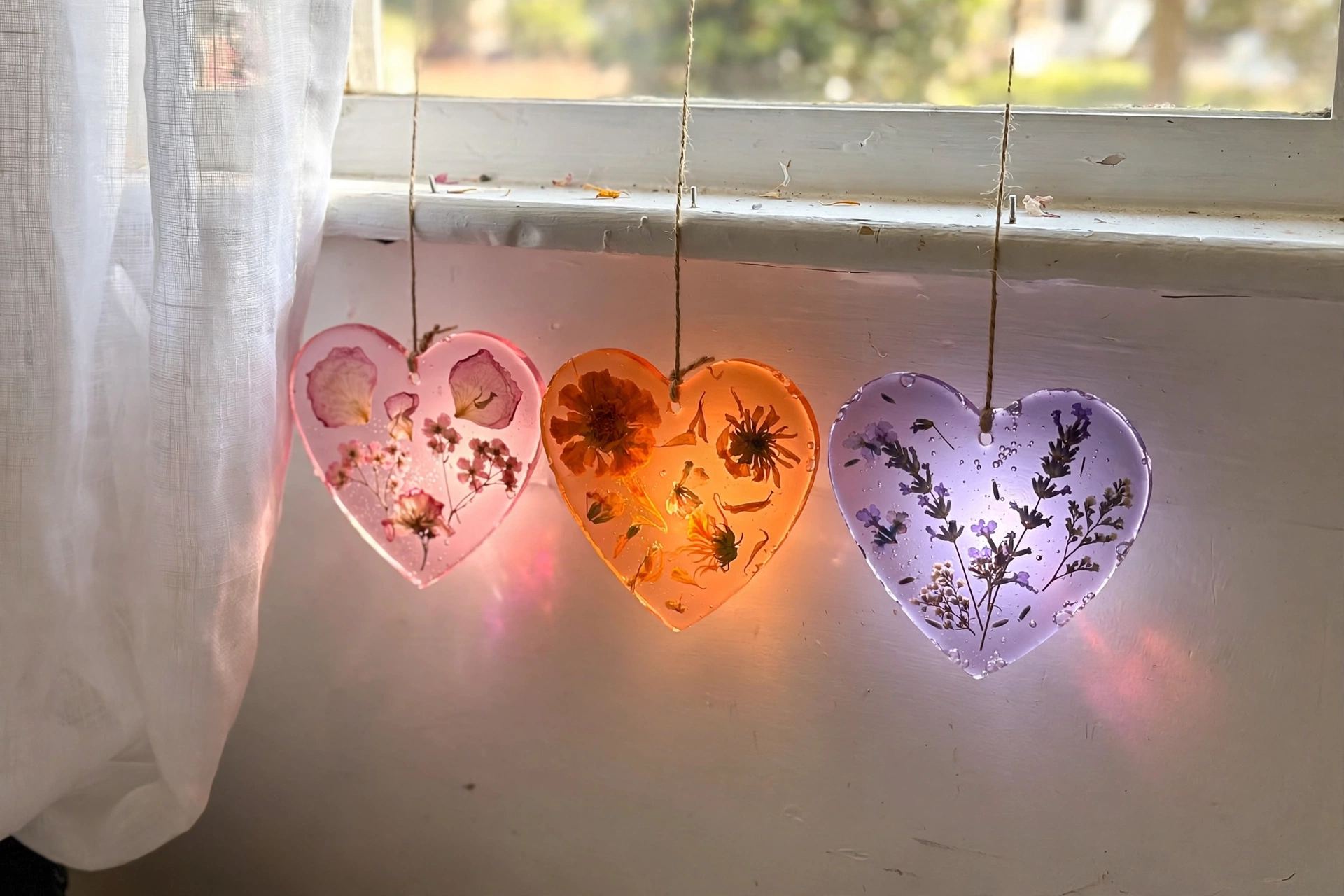
There's something almost magical about making plastic that isn't plastic. These bioplastic suncatchers are cooked up from gelatin and water — completely biodegradable, completely non-toxic — and they turn into gorgeous translucent discs that glow in a sunny window. My kids still can't believe something you could technically eat turned into window art.
This is a slow craft in the best way: ten minutes of cozy stovetop stirring, a nature walk to gather petals and leaves, then a day or two of waiting while they dry. It taught my two patience without a single lecture.
Why You'll Love Making This
This craft is part science experiment, part art project, part eco-lesson — and it feels like kitchen alchemy. Kids watch a runny liquid turn thick and glossy on the stove, then turn solid and glassy as it dries. That's chemistry they can hold.
Everything is safe and biodegradable, so there's no guilt and no waste. When a suncatcher finally gets tired, it goes in the compost, not the trash.
Materials You'll Need
- Unflavored gelatin: 1 tablespoon (about 1 packet)
- Water: 1/2 cup
- Cornstarch: 2 tablespoons (for a firmer finish)
- White vinegar: 1 tablespoon
- Food coloring or natural colorants: beet juice, turmeric, or a few drops of food coloring
- Small saucepan: for cooking the mixture
- Plastic lids or silicone molds: yogurt or sour cream lids make perfect molds
- Flower petals, leaves, or pressed flowers: gathered on a nature walk
- String or yarn: for hanging
- A tray or towel: for drying
Step-by-Step Directions
- Take a nature walk first! Gather small petals, leaves, and herbs. Press flat ones in a book if you have time.
- Arrange your nature finds inside clean plastic lids. Let the kids design freely — patterns, spirals, or happy chaos.
- In the saucepan, stir together the water, cornstarch, vinegar, and gelatin until smooth with no lumps. Adults handle the stove from here.
- Heat over medium-low, stirring constantly, for 3 to 5 minutes until the mixture thickens into a glossy gel. Remove from heat.
- Stir in your colorants — a drop or two of food coloring per batch, or natural options like turmeric for yellow.
- Carefully pour the warm gel over the arranged petals in each lid, just enough to cover everything in a thin layer.
- Press a small loop of string into the gel while it's still warm to make a hanger.
- Let them dry at room temperature for 24 to 48 hours, flipping halfway through. Cover loosely with a towel to keep dust off.
- Pop the firm suncatchers out of their lids and hang them in a sunny window.
Tips & Variations
- Thinner layers dry faster and warp less — resist the urge to pour thick.
- Avoid humid rooms; humidity makes drying take forever and the suncatchers sticky.
- Add biodegradable glitter or tiny tissue paper shapes for extra sparkle.
- Tint with kitchen colorants: turmeric for gold, beet juice for rose, spirulina for green.
<p><img src="https://thediynook.com/wp-content/uploads/2026/09/pin-v1-115.webp" alt="Cozy Bioplastic Suncatchers for Kids" /></p>
FAQs
Are bioplastic suncatchers really safe for kids?
Yes — every ingredient is food-grade. The only step needing an adult is the stovetop cooking.
How long do they last?
Indoors in a dry spot, weeks to months. They're meant to be temporary art — compost them when they start to curl or dull.
Why did mine curl up while drying?
Too thick, or dried in a humid spot. Pour thin, flip halfway, and keep them in a dry, ventilated room.
Can we speed up the drying?
A fan helps. Don't use the oven unless an adult is supervising on the very lowest heat — they can bubble.
My gelatin never thickened. What happened?
It may not have gotten warm enough, or the heat was too high and it broke down. Gentle medium-low heat and constant stirring is the sweet spot.
Can we make shapes other than circles?
Silicone cookie molds, muffin tins, or cookie cutters on a silicone mat all work — just pour a thin layer and let it set.

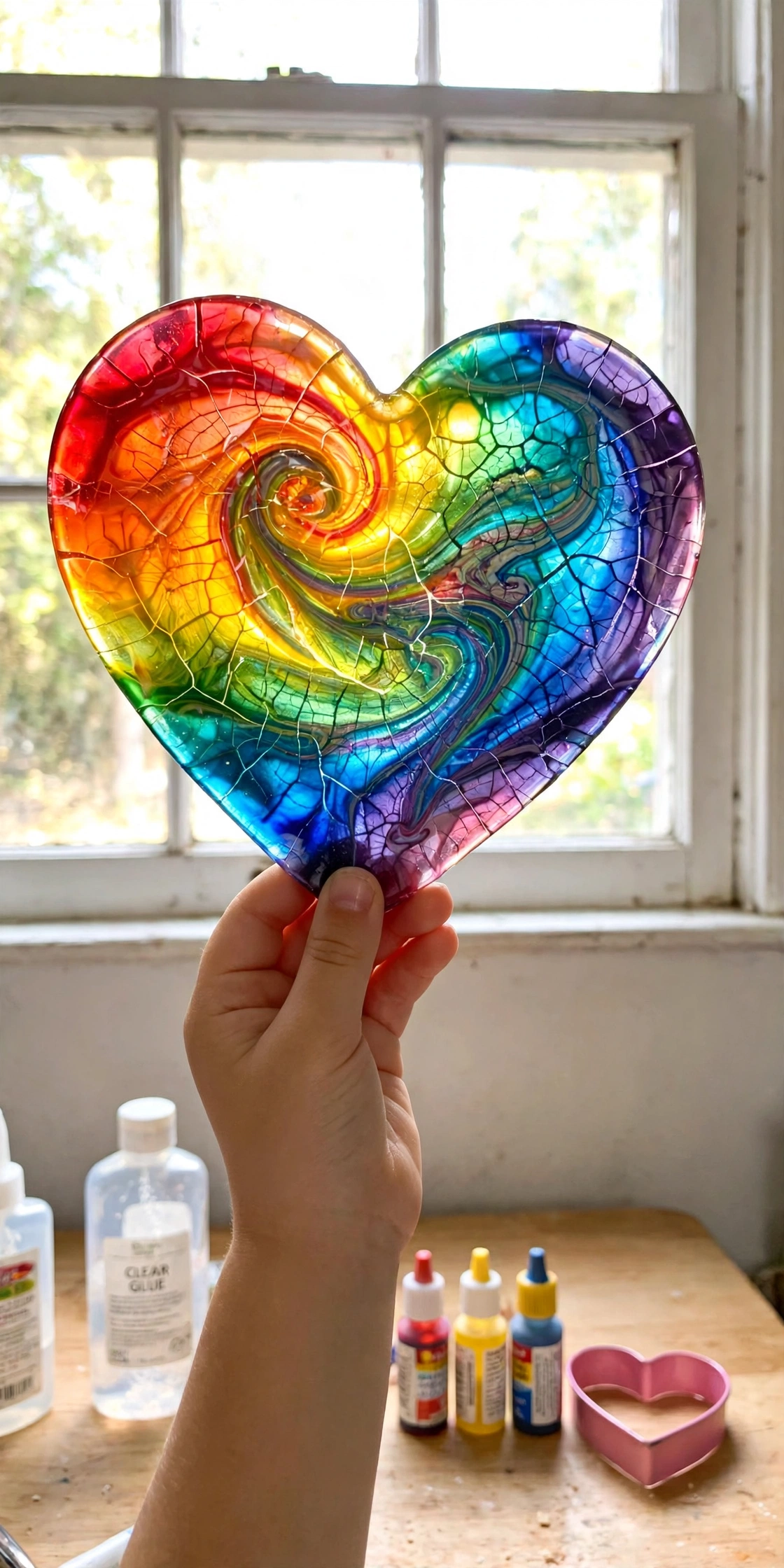 Easy Swirled Glue Suncatchers for Kids
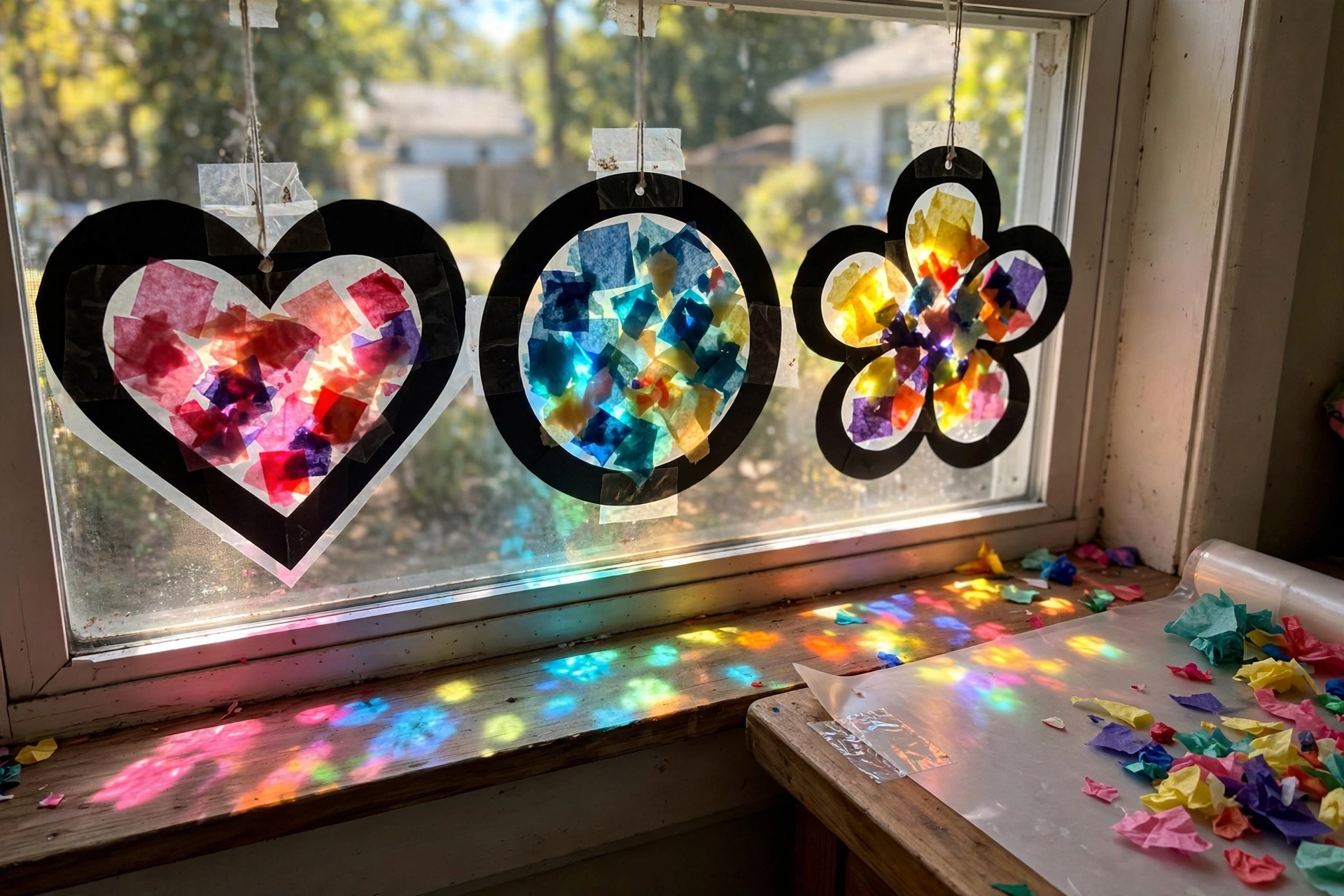 Easy Colorful Suncatchers for Kids
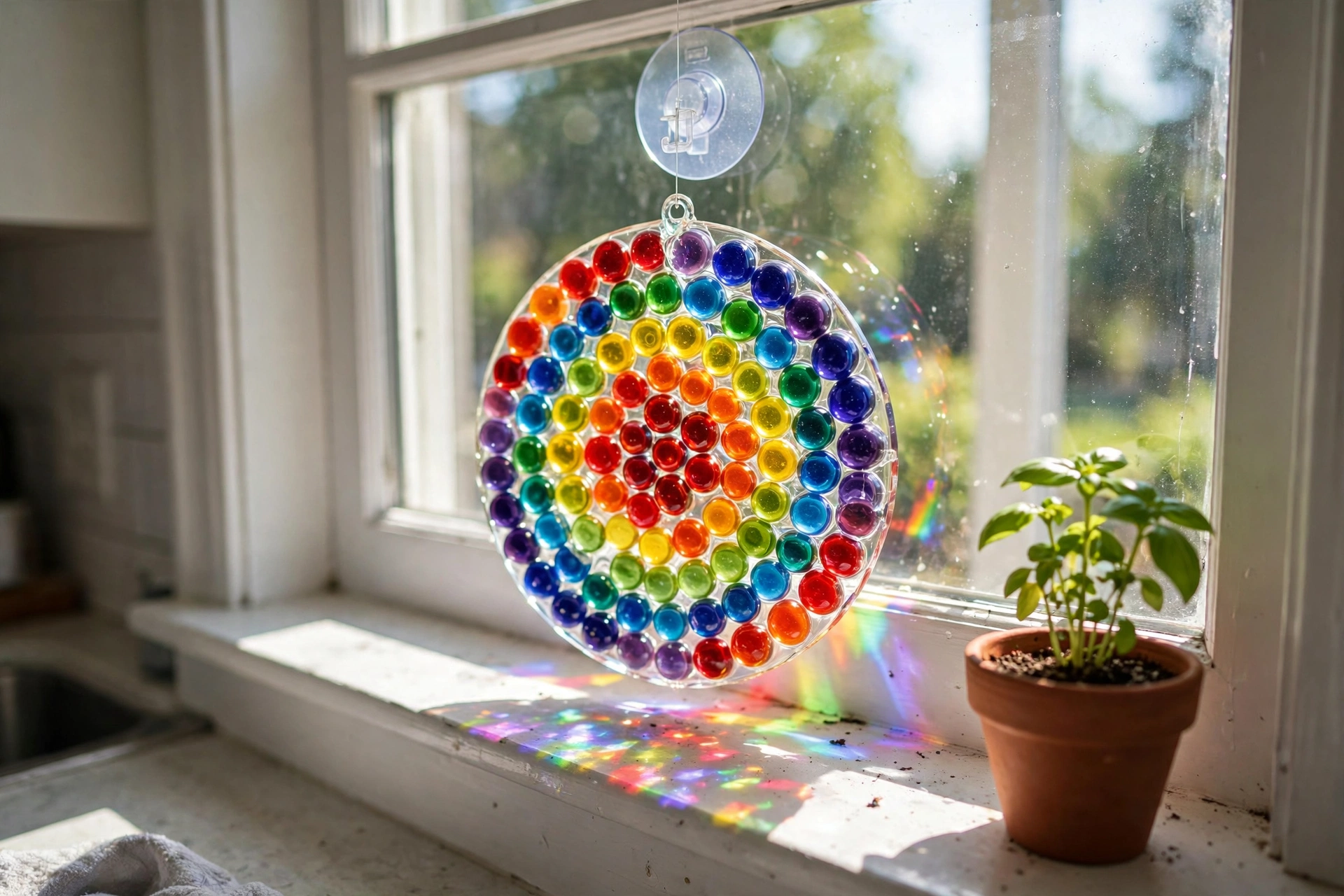 Easy DIY Glass Bead Suncatcher
 Easy DIY Bioplastic Suncatchers for Kids
Leave a Reply